English
 简体中文
简体中文
What materials are degradable plastic bags mainly made of?
27/06/2022
Degradable plastics, also known as environmentally degradable plastics, refer to plastics that are added to a certain amount of additives during the production process to reduce their stability and are more easily degraded in the natural environment. With the development of science and technology, various materials that can replace traditional PE plastics have appeared, including PLA, PHAs, PBA, PBS and other polymer materials. Can replace traditional PE plastic bags. Biodegradable environmentally friendly plastic bags have been widely used at present: the main application fields are agricultural mulch, various plastic packaging bags, garbage bags, shopping bags in shopping malls and disposable tableware.
Biodegradable plastics refer to a class of plastics that are degraded by the action of naturally occurring microorganisms such as bacteria, molds (fungi) and algae. The ideal biodegradable plastic is a polymer material with excellent performance, which can be completely decomposed by environmental microorganisms after being discarded, and finally be inorganicized to become an integral part of the carbon cycle in nature. "Paper" is a typical biodegradable material, while "synthetic plastic" is a typical polymer material. Therefore, biodegradable plastics are polymer materials that have the properties of both "paper" and "synthetic plastics". Biodegradable plastics can be divided into completely biodegradable plastics and destructive biodegradable plastics.
Destructive biodegradable plastics: Destructive biodegradable plastics currently mainly include starch-modified (or filled) polyethylene PE, polypropylene PP, polyvinyl chloride PVC, polystyrene PS, etc.
Completely biodegradable plastics: Completely biodegradable plastics are mainly made from natural polymers (such as starch, cellulose, chitin) or agricultural and sideline products through microbial fermentation or synthesis of biodegradable polymers, such as thermoplastic starch plastics, aliphatic Polyester, polylactic acid, starch/polyvinyl alcohol.
Raw materials of degradable shopping bags
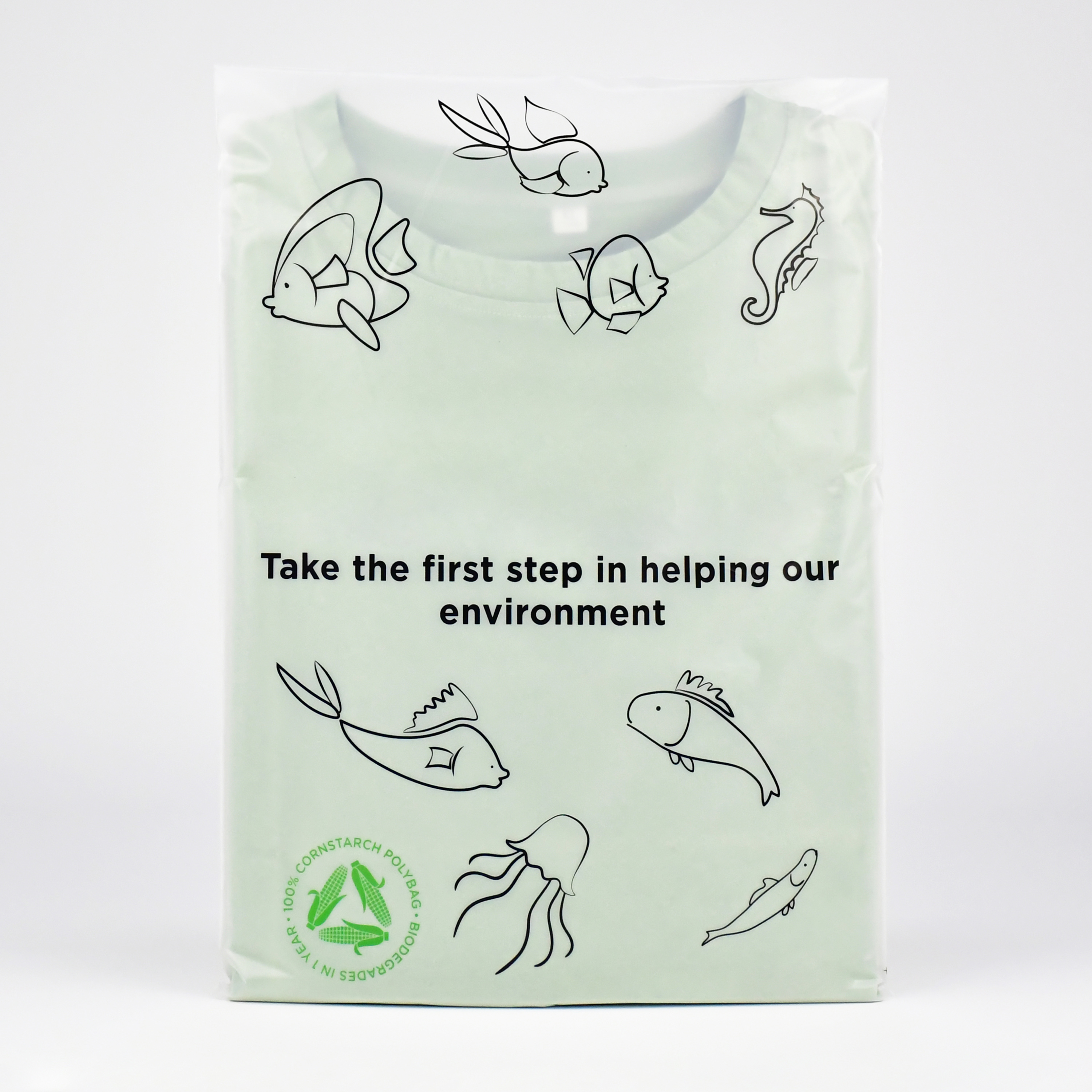
Degradable plastic bags, also known as biodegradable shopping bags, are made of materials extracted from plants such as plant starch, corn flour, etc. These raw materials will not cause any harm to the human body and the environment.
The use of degradable shopping bags can be disposed of in a landfill. It only takes a while for the shopping bags to be degraded into biological particles, which are then absorbed by soil matter. Degradable plastic bags not only will not have any impact on the environment, but can also become fertilizers for plants and crops to promote plant growth.
Therefore, the use of degradable shopping bags is now popular, and the use of non-degradable shopping bags is gradually decreasing. Non-degradable shopping bags will cause great harm to human health and ecological environment.
The hazards of non-degradable shopping bags
The opposite of degradable shopping bags are non-degradable shopping bags. In fact, ordinary shopping bags can also be degraded, but they have been degraded for a very long time, up to two hundred years. What's more, the amount of plastic bags used in human society is so large. If non-degradable plastic bags are used again, the ecological environment of the earth will become worse and worse.
People don't have a good way to recycle shopping bag waste, either incineration or landfill. Non-degradable shopping bags have an environmental impact no matter how they are disposed of. For example, burning will emit an unpleasant odor and produce a large amount of black ash; if it is disposed of in a landfill, it will take the earth hundreds of years to decompose the plastic bags.
The prospect of degradable plastic bags
It is reported that China uses 1 billion plastic bags every day to buy vegetables, and the consumption of other plastic bags is more than 2 billion every day. Equivalent to every Chinese person using at least 2 plastic bags every day. Before 2008, China used about 3 billion plastic bags every day. After the plastic restriction, supermarkets and shopping malls have reduced the use of plastic bags by 2/3 through charging and other methods.
The annual output of plastics in China is 30 million tons, and the consumption is more than 6 million tons. If plastic bags are calculated at 15% of the annual plastic waste, the world's annual plastic waste is 15 million tons. China's annual plastic waste is more than 1 million tons, and the proportion of waste plastics in garbage accounts for 40%. Such a large amount of waste. The waste plastics are buried underground as garbage, which will undoubtedly bring more pressure to the arable land that is already lacking.
The whole world is facing the same problem, so the market prospect of biodegradable plastic bag products is not only limited to China, but the market is so broad that it covers almost every corner of the earth. From the overall trend, degradable plastic bags have gradually become a development trend. The increase in the price of plastic bags will prompt some people to use cloth bags for shopping. From this aspect, it is beneficial to the protection of the environment. In the next 3-5 years, it will quickly occupy the market and become a substitute for ordinary plastic products. According to industry forecasts, the global packaging market demand for degradable plastics will reach 9.45 million tons in 2023, with an average annual compound growth rate of 33%. It can be said that the development potential of the degradable plastic packaging market is huge.