English
 简体中文
简体中文
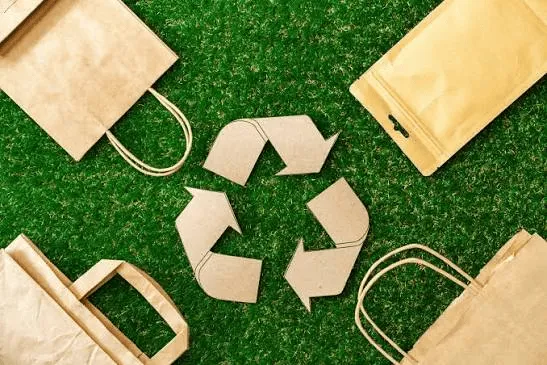
Choosing between fiber-based and traditional plastic packaging is no longer simply a question of which material is more environmentally friendly. For packaging buyers, the decision also involves product protection, moisture resistance, cost, appearance, material composition, end-of-life options, and regulatory requirements.
This guide provides a balanced, evidence-based comparison of degradable fiber bags and traditional plastic bags — helping B2B buyers determine when a fiber-based solution makes sense, and when traditional plastic remains the more practical choice.
Table of Contents
- 1. What Are Degradable Fiber Bags?
- 2. Why Traditional Plastic Bags Dominated Packaging
- 3. Key Advantages of Degradable Fiber Bags
- 4. Performance Comparison: Fiber vs Plastic
- 5. Cost Considerations & Total Cost of Ownership
- 6. Application Suitability by Industry
- 7. How to Choose: A Decision Framework
- 8. Critical Questions to Ask Your Supplier
- 9. Frequently Asked Questions
What Are Degradable Fiber Bags?
Degradable fiber bags are packaging products made primarily from cellulose, plant-derived fibers, or other renewable biomass, combined with binders, coatings, or additives to achieve the required strength, flexibility, and barrier properties.
Key material types include:
- Pure cellulose fibers – Natural, renewable, compostable under defined conditions
- Blended fibers – Combination of natural and synthetic fibers for enhanced performance
- Coated fiber structures – Added barrier layers for moisture or grease resistance
Key Terminology Clarified
| Term | What It Describes | Does It Mean Biodegradable? |
|---|---|---|
| Fiber-based | Material structure/source | No |
| Bio-based | Renewable biological feedstock | No |
| Biodegradable | Ability to biodegrade under defined conditions | Under those conditions |
| Compostable | Meets defined composting requirements | Under applicable conditions |
| Recyclable | Ability to enter a recycling system | No |
Why Traditional Plastic Bags Dominated Packaging
Conventional plastic bags (PE, PP, etc.) became the industry standard for good reasons:
- Cost efficiency – Mature production and economies of scale keep unit costs low
- Excellent moisture resistance – Low water permeability protects contents in humid conditions
- High strength-to-weight ratio – Lightweight yet strong and tear-resistant
- Manufacturing scalability – High-speed extrusion, printing, and sealing processes
- Global supply chain – Raw materials and converting capacity are widely available
Key Advantages of Degradable Fiber Bags
1. Renewable Material Sourcing
Fiber bags can be made from renewable feedstocks such as wood pulp, agricultural residues, or other plant-based materials, reducing dependence on fossil-based polymers.
2. Distinctive Tactile and Visual Experience
Fiber-based packaging offers a natural texture, matte appearance, and fabric-like feel that conveys premium quality — especially valued in apparel, retail, and gift packaging.
3. End-of-Life Flexibility
Depending on formulation, fiber bags may be designed for recycling, industrial composting, or biodegradation under defined conditions — providing options that traditional plastics often lack.
4. Brand Positioning and Differentiation
Fiber packaging can support sustainability messaging and premium brand identity, making it attractive for companies targeting environmentally conscious consumers.
5. Reuse Potential
Many fiber bags are sturdy enough for secondary use (e.g., shopping, storage), extending their useful life and reducing single-use waste.
Performance Comparison: Fiber vs Plastic
| Factor | Traditional Plastic Bags | Degradable Fiber Bags |
|---|---|---|
| Material source | Fossil-based polymers | Renewable fibers (cellulose, plant-based) |
| Moisture resistance | Generally high | Depends on coating/structure; often lower |
| Flexibility | High | Moderate to high (material dependent) |
| Tensile strength | Good | Varies; can be engineered to meet requirements |
| Tear resistance | Good to excellent | Depends on fiber length and bonding; generally lower than plastic |
| Surface feel | Smooth, plastic-like | Natural, fabric-like, premium |
| Unit cost | Lower | Often higher |
| End-of-life options | Recycling (limited), landfill, incineration | Recycling, composting, biodegradation (depending on formulation) |
| Sustainability positioning | Limited | Potentially stronger, with verified claims |
| Supply chain maturity | Very mature, global | Developing, more application-specific |
Cost Considerations & Total Cost of Ownership
Degradable fiber bags often have a higher unit cost than conventional plastic bags. However, unit price is only one component of total packaging cost.
Material + Conversion + Printing + Labor + Transportation + Storage + Compliance/Disposal + Failure Cost
When evaluating cost, consider:
- Material costs: Fiber processing, specialty coatings, and lower production scale can increase costs.
- Operational impacts: Different handling, sealing, or storage requirements may affect labor and efficiency.
- Failure rates: If fiber bags are more prone to tearing or moisture damage, replacement costs can offset savings.
- Brand value: Premium packaging can justify higher price points and improve customer loyalty.
- Compliance risk: Regulatory requirements for plastic reduction may make fiber bags a strategic investment.
Request detailed cost breakdowns from suppliers and model total cost for your specific supply chain before making a decision.
Application Suitability by Industry
| Industry / Application | Plastic Bags | Fiber Bags | Key Consideration |
|---|---|---|---|
| Apparel / Garment Packaging | High | High | Fiber offers premium feel; plastic for moisture protection |
| Retail / Shopping Bags | High | High | Fiber supports branding and reuse; plastic for cost |
| Electronics / Smart Products | High | Moderate | Moisture and static protection critical; fiber may need coatings |
| E-Commerce Shipping | High | Moderate | Durability and moisture resistance are key; fiber can work for dry goods |
| Gift / Premium Packaging | Low | High | Fiber provides superior aesthetics and tactile experience |
How to Choose: A Decision Framework
5-Step Selection Process
- Define Product Requirements – Identify product weight, moisture sensitivity, fragility, and handling conditions.
- Assess Supply Chain Conditions – Consider transportation, storage duration, humidity, and temperature variations.
- Determine End-of-Life Goals – Is recycling available? Industrial composting? Reuse? What happens after disposal?
- Compare Material Performance Objectively – Request test data: tensile, tear, moisture resistance, seal strength, and shelf life.
- Evaluate Total Cost and Supplier Capability – Calculate total packaging cost and verify supplier qualifications, certifications, and quality control.
Critical Questions to Ask Your Supplier
- Material composition — What are the exact fiber types, binders, coatings, and additives?
- Performance test data — Can you provide tensile, tear, moisture resistance, and seal strength test reports?
- End-of-life conditions — Under what conditions does this bag biodegrade or compost? Which certification applies?
- Customization capabilities — Can you adjust size, thickness, printing, coatings, and handle designs?
- Quality consistency — How do you control batch-to-batch variation? What are your quality control procedures?
- Supply stability — What is your production capacity and lead time for large orders?
- Regulatory compliance — Does your product meet relevant packaging regulations in my target markets?
Not Sure Which Material Fits Your Application?
Our technical team can review your product requirements, supply chain conditions, and sustainability goals to recommend the most suitable packaging structure — fiber, plastic, or a hybrid solution. Free consultation available.
Request a Packaging Consultation →💬 Response within 2-4 hours. B2B technical support.
Frequently Asked Questions (FAQ)
Are degradable fiber bags completely waterproof?
Not inherently. Uncoated fiber bags absorb moisture and lose strength in humid conditions. To achieve water resistance, fiber bags typically require barrier coatings (e.g., bio-based polymers, wax, or laminated layers). Even with coatings, they rarely match the moisture barrier performance of traditional PE film. Always request water vapor transmission rate (WVTR) test data.
Is "fiber-based" the same as "biodegradable"?
No. "Fiber-based" describes the material source (plant-derived). "Biodegradable" describes the end-of-life behavior (ability to break down under defined conditions). A fiber bag may contain synthetic coatings, adhesives, or additives that prevent it from biodegrading. Always evaluate the complete finished bag structure, not just the primary fiber content.
How much more expensive are degradable fiber bags than plastic bags?
Typically, degradable fiber bags cost 2 to 5 times more than standard PE bags, depending on fiber type, GSM, coatings, customization, and order volume. However, unit price is not the only cost factor. Buyers should calculate total cost of ownership — including labor, transportation, storage, failure rates, and brand value — to make an accurate comparison.
Are compostable and biodegradable the same thing?
No. "Biodegradable" means a material can break down through biological activity under suitable conditions — but these conditions are not always specified. "Compostable" is a stricter subset that requires the material to meet defined standards (e.g., EN 13432, ASTM D6400) for disintegration, biodegradation rate, and non-toxicity under industrial composting conditions.
Can degradable fiber bags be recycled?
It depends on the exact material structure and local recycling infrastructure. Pure cellulose fiber bags (without coatings or synthetic binders) can often be recycled in paper streams. However, coated or laminated fiber bags may contaminate paper recycling and are typically not accepted. Always confirm recyclability with your local waste management authority.
Are fiber bags suitable for electronics or food packaging?
For electronics, fiber bags can provide surface protection but typically lack moisture and static barrier performance. Anti-static coatings or PE inner layers are often required. For food, fiber bags can be used for dry products but require food-grade coatings for grease or moisture resistance. Always verify regulatory compliance and performance test data.
What certifications should I look for in degradable fiber bags?
The appropriate certification depends on the specific claim:
- Compostability (industrial): EN 13432 (Europe) or ASTM D6400 (USA)
- Home compostability: OK compost HOME (TÜV Austria)
- Bio-based content: OK biobased
- Recycled content: GRS (Global Recycled Standard)
- FSC sourcing: FSC certification for wood fiber
Always verify that the certification applies to the finished bag, not just the raw material.
What happens if a degradable fiber bag ends up in a landfill?
In a landfill (oxygen-deprived, low-temperature, low-moisture environment), even "biodegradable" fiber bags degrade extremely slowly — often taking years to decades. The environmental benefit of fiber bags is best realized when they are correctly sorted for composting or recycling. Without proper disposal infrastructure, their environmental advantage over plastic is limited.
Conclusion: When Should Businesses Choose Degradable Fiber Bags Instead of Plastic?
There is no universally "best" packaging material.
Traditional plastic bags remain highly competitive when businesses prioritize:
- Low cost
- Moisture resistance
- Flexibility
- Consistent mechanical performance
- Mature supply chains
Degradable fiber bags may be more appropriate when businesses prioritize:
- Renewable material opportunities
- Specific end-of-life objectives
- Natural tactile appearance
- Sustainable packaging positioning
- Premium differentiation
The most reliable decision framework is:
For businesses developing sustainable packaging, the goal should not simply be to replace plastic with another material. The better approach is to select a packaging structure that balances product protection, material performance, cost, environmental claims, and real-world disposal conditions.
Fiber-based packaging may solve certain brand and sustainability objectives while creating different performance or cost considerations. The comparison shows why replacing plastic should not be treated as a simple material upgrade, but as a structured sourcing decision based on specific application requirements.
Ready to Make a Data-Driven Packaging Decision?
Talk to our technical team for a free material comparison analysis — including performance test data, cost modeling, and supplier qualification support. We'll help you choose the right packaging structure for your specific application.