EU PPWR 2026: A Practical Compliance and Procurement Guide for Apparel, Footwear & Luggage Packaging
EU PPWR 2026: A Practical Compliance and Procurement Guide for Apparel, Footwear & Luggage Packaging
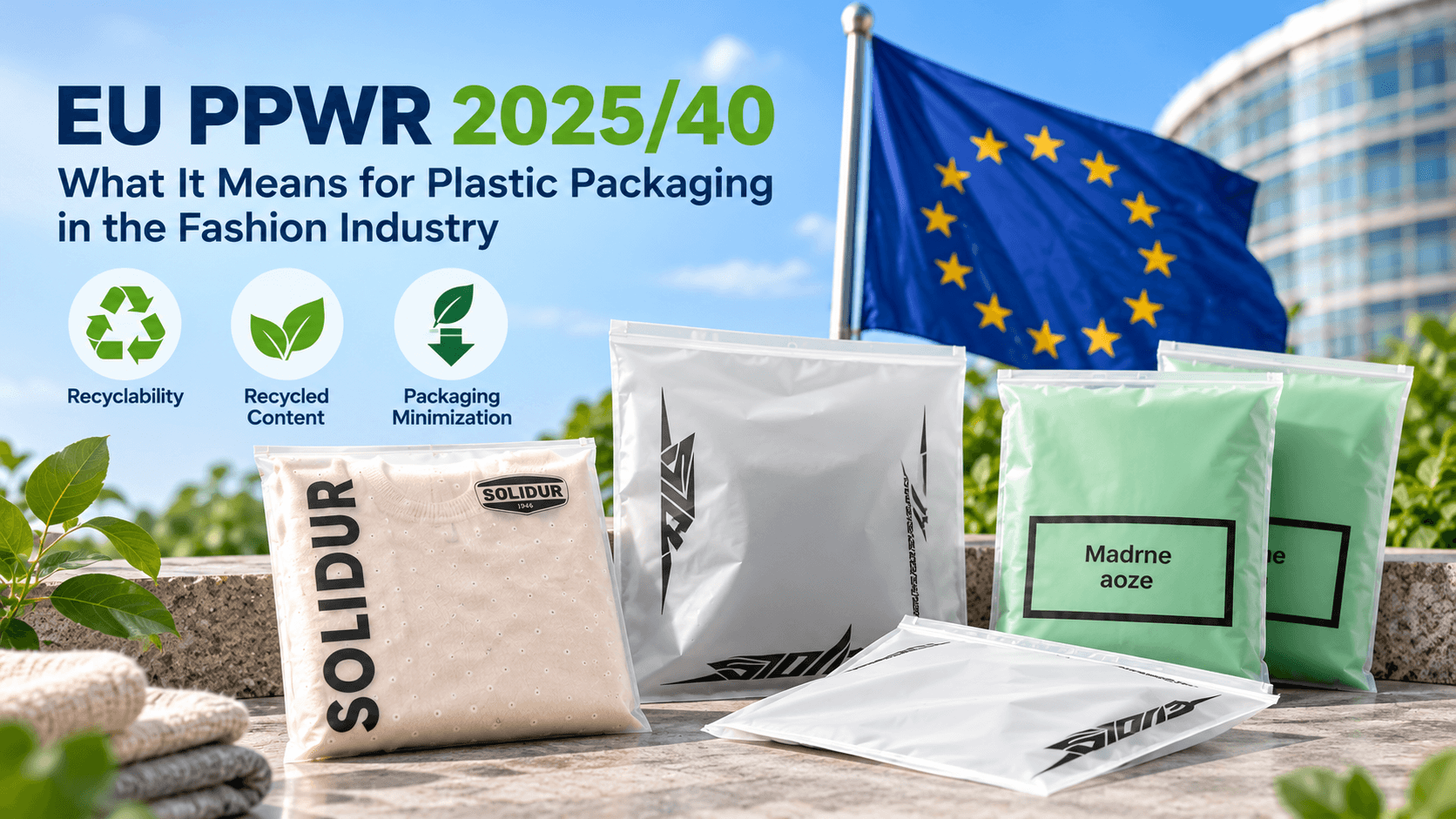
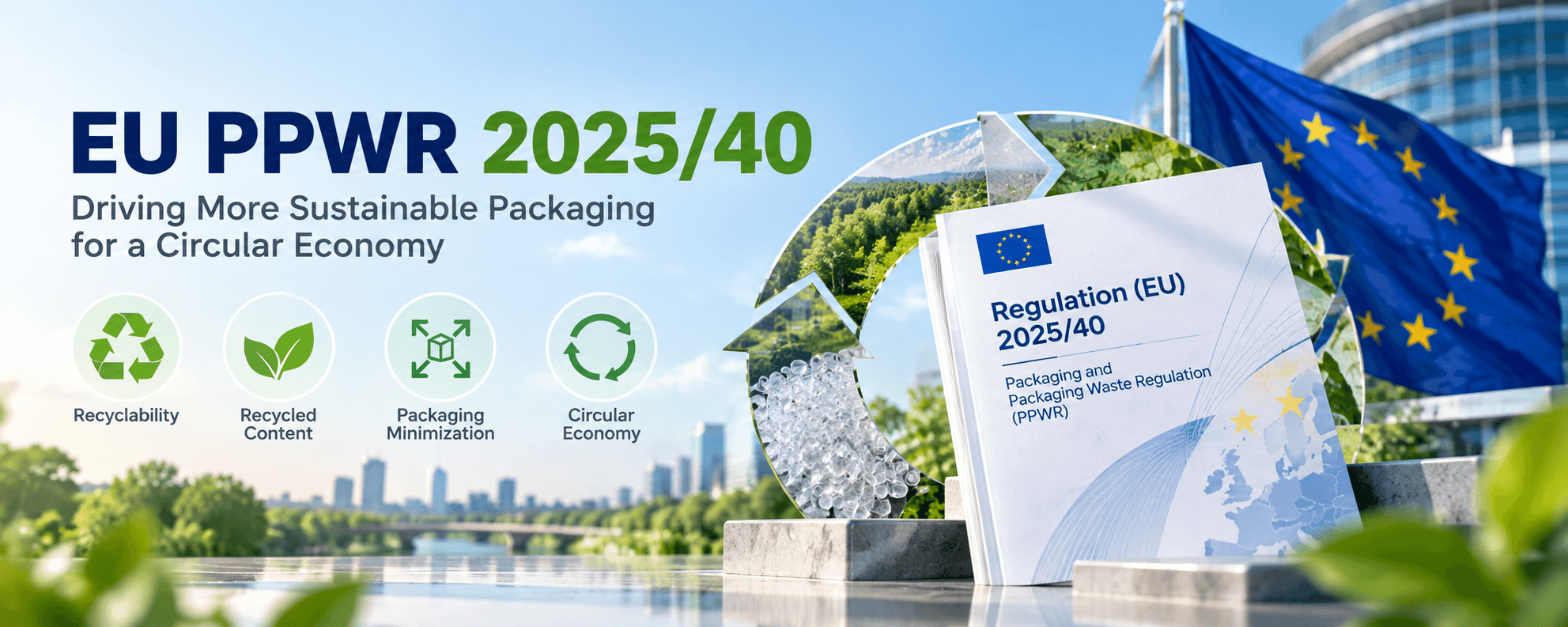
The EU Packaging and Packaging Waste Regulation (PPWR), Regulation (EU) 2025/40, generally began applying on August 12, 2026. It introduces a new regulatory framework for packaging sustainability, recyclability, recycled content and waste reduction.
For apparel, footwear and luggage brands selling products in the EU, this raises important procurement questions: Can existing plastic packaging still be used? What needs to change? And how can buyers verify that new packaging meets applicable requirements?
This guide explains the key PPWR requirements and provides a practical process for reviewing existing packaging, selecting materials and preparing procurement documentation.
1. What Does PPWR Actually Require for Fashion Packaging?
PPWR does not mean that all plastic packaging must immediately be replaced. Its purpose is to reduce unnecessary packaging, improve recyclability and progressively increase recycled content in certain plastic packaging categories.
For fashion packaging buyers, three requirements deserve particular attention.
Recyclability: Evaluate the Entire Package
Under PPWR Article 6, packaging must meet applicable recyclability requirements, with detailed design-for-recycling criteria introduced according to the regulation's phased timetable.
For a PE garment bag, recyclability cannot be determined by the main film alone.
- PE Flat Bags: Review the film, printing and labels.
- PE Self-Seal Bags: Evaluate the film, adhesive closure and additional components.
- PE Zipper Bags: Consider the film, zipper, slider and printing together.
Procurement advice: Evaluate the complete packaging structure rather than relying solely on the recyclability of the main material.
Recycled Content: Confirm PCR Requirements Before Choosing Materials
PPWR Article 7 establishes future minimum post-consumer recycled (PCR) content requirements for specified plastic packaging categories.
For example, certain non-contact-sensitive plastic packaging categories have a 35% PCR target, subject to the applicable implementation date, calculation rules and exemptions.
This does not mean every plastic garment bag must contain 35% PCR in 2026.
Buyers should first identify the packaging category and applicable requirements before specifying recycled-content percentages.
It is also important to distinguish PCR from pre-consumer recycled (PIR) material. A general recycled-content claim does not necessarily demonstrate the PCR percentage required by PPWR.
Procurement advice: Ask suppliers to confirm the PCR percentage, material source and supporting evidence—not simply whether the bag contains recycled plastic.
Packaging Minimization: Reduce Waste Without Compromising Protection
PPWR Article 10 establishes packaging minimization requirements, with its specific obligations applying according to the regulation's implementation timetable.
For apparel packaging, buyers can review bag dimensions, thickness and unused internal space to identify unnecessary material consumption.
However, thinner packaging is not always better. The bag must still provide sufficient protection during storage, handling and transportation.
Procurement advice: Optimize packaging dimensions and material usage while maintaining essential product performance.
What Should Buyers Prepare for in 2026 and Beyond?
| Period | Recommended Procurement Action |
|---|---|
| 2026 | Identify applicable current obligations and collect existing packaging specifications and supplier information. |
| 2027–2029 | Follow relevant implementing measures, assess PCR material options and test packaging improvements. |
| 2030 onward | Meet applicable recyclability, recycled-content and minimization requirements as their respective provisions take effect. |
Implementation dates differ across PPWR provisions, and some depend on subsequent legal measures. This table is a procurement planning guide rather than a universal legal deadline schedule.
Key takeaway: Before changing packaging, determine its classification, applicable requirements and implementation dates.
2. How to Upgrade Existing Plastic Packaging: A Step-by-Step Procurement Guide
Understanding PPWR is only the beginning. Buyers also need a practical way to turn regulatory requirements into packaging specifications.
Consider a fashion brand currently using a transparent virgin PE self-seal bag for T-shirts.
The following five steps provide a structured approach to reviewing and improving that packaging.
Step 1: Review Your Current Packaging Specifications
Begin by documenting the packaging currently in use.
Confirm:
- Material composition and bag structure.
- Dimensions, thickness and weight.
- Adhesive closure, printing and additional components.
- Existing recycled-content percentage, if any.
- Packaging function and destination market.
This information establishes a baseline for identifying potential compliance gaps.
Expected result: A complete packaging specification sheet.
Step 2: Identify What Needs to Change
Not every package requires a complete material replacement, and not every packaging category has the same PCR requirement.
Compare the existing specifications with the applicable requirements.
| Existing Packaging Issue | Possible Improvement |
|---|---|
| Material does not meet an applicable PCR requirement | Evaluate recycled PE with the required verified PCR content. |
| Closures or printing may affect recyclability | Review compatible materials and alternative component designs. |
| Excessive internal space | Adjust bag dimensions to fit the product. |
| Thickness does not match functional needs | Optimize material usage through performance testing. |
| Insufficient material documentation | Request additional traceability and technical evidence. |
For example, if a buyer wants to replace a virgin PE garment bag with a recycled PE version, the PCR target should be defined before evaluating film performance, appearance and closure compatibility.
Expected result: A clear list of required packaging changes.
Step 3: Confirm a Feasible Solution with Your Supplier
Once the improvement priorities are clear, provide your supplier with the current packaging specifications and target requirements.
Ask the supplier to confirm:
- Suitable recycled-material options.
- Available PCR percentages and supporting evidence.
- Whether the closure, printing or other components require adjustment.
- Potential effects on transparency, strength and sealing performance.
- Available certifications and technical documentation.
If one proposed material cannot meet both environmental objectives and product performance requirements, compare alternative solutions before proceeding.
Expected result: A technically feasible packaging proposal ready for sampling.
Step 4: Test and Approve the Packaging Sample
Material changes should be validated through physical samples.
For a PE self-seal garment bag, check:
- Fit and dimensions with the actual garment.
- Film strength and product protection.
- Adhesive closure performance.
- Transparency and printing quality.
- Consistency between the sample and proposed material specifications.
If the sample does not meet the required performance, revise the specifications and repeat the necessary tests.
Expected result: An approved sample and confirmed product specifications.
Step 5: Verify Documentation Before Bulk Production
Before placing a production order, compare the approved sample with the final technical specifications and supporting documents.
A practical verification checklist includes:
- Finished packaging specifications and material composition.
- PCR percentage and relevant material-source evidence.
- Applicable GRS documentation and EN 15343-related traceability information.
- Available recyclability assessments or supporting technical reports.
- Information needed for applicable PPWR compliance documentation.
GRS supports specific recycled-content and chain-of-custody claims, while EN 15343 addresses recycled-plastic traceability and recycled-content assessment.
Neither standard independently guarantees full PPWR compliance. Buyers must assess the finished packaging against the applicable legal requirements.
Expected result: An approved packaging specification, supporting evidence and a documented basis for procurement.
The Complete Procurement Process
Identify Applicable Requirements → Review Existing Packaging → Define Improvements → Confirm Supplier Solutions → Test Samples → Verify Documentation → Approve Production
Following this process helps buyers move from general regulatory awareness to practical packaging procurement decisions.
3. Frequently Asked Questions About PPWR Packaging Procurement
Q1. Can virgin PE garment bags still be used in the EU?
PPWR does not impose an immediate blanket ban on virgin PE garment bags.
Whether a specific package can continue to be placed on the EU market depends on the applicable requirements, implementation dates, packaging structure and supporting documentation.
Buyers should assess their existing packaging rather than assume all virgin plastic packaging is prohibited.
Q2. Must all plastic garment bags contain 35% PCR in 2026?
No. The 35% PCR target under Article 7 applies to specified plastic packaging categories at a later implementation stage, subject to the relevant provisions, calculation rules and exemptions.
It is not a universal requirement for all garment bags in 2026.
Q3. Does GRS certification automatically mean PPWR compliance?
No. GRS can support recycled-content and supply-chain claims, but PPWR compliance may also require recyclability assessments, technical documentation and verification of other applicable obligations.
Q4. Can PE zipper bags be designed for recyclability?
Potentially, yes. The film, zipper, slider, printing and other components should be evaluated together.
Material compatibility and applicable recycling criteria determine whether the finished package is suitable.
Q5. What information should buyers provide when requesting PPWR-oriented packaging?
Buyers should provide the bag type, dimensions, thickness, material preference, closure structure, PCR requirements where applicable, printing artwork, order quantity and destination market.
They should also specify the required certificates, technical documents and supporting reports.
This allows suppliers to recommend suitable packaging solutions instead of offering a generic recycled plastic bag.
4. Why Choose Goolien for PPWR-Oriented Packaging Solutions?
Preparing for PPWR requires more than understanding regulations. Brands need packaging suppliers capable of translating material, structural and documentation requirements into practical manufacturing solutions.
Dongguan Goolien Packing Technology Co., Ltd. provides customized OEM/ODM packaging for apparel, footwear, luggage and consumer brands.
Recycled Material and Packaging Options
Goolien offers recycled packaging material options including PE, OPP, PP, PO and CPE, supported by GRS and EN 15343-related certification and traceability capabilities.
Our customizable packaging range includes:
- PE Self-Seal Bags: Protective garment packaging with convenient adhesive closures.
- PE Grip Seal and Zipper Bags: Reclosable solutions for apparel and accessories.
- PE Slider Zipper Bags: Custom closure options for fashion packaging applications.
- PE Flat Bags and Shipping Mailers: Packaging for storage, distribution and e-commerce delivery.
All product categories support custom sizes and custom printing, allowing customers to match packaging specifications with their products and brand identity.
From Material Selection to Manufacturing
Goolien provides integrated OEM/ODM services covering material selection, sampling, printing, bag making and quality inspection.
For customers reviewing PPWR-related packaging requirements, our team can assist with:
- Comparing suitable recycled-material options.
- Developing customized bag structures and specifications.
- Reviewing recycled-content requirements.
- Preparing samples for product testing and approval.
- Providing relevant available certification and material documentation.
Each proposed solution should be assessed against the finished packaging specification and applicable EU requirements.
Start Your Custom Packaging Project
Whether you are reviewing existing garment bags or developing recycled PE packaging, Goolien can support your material selection, customization and manufacturing needs.
Share your current packaging specifications, intended application and target-market requirements with our team.
Contact Goolien to explore customized recycled plastic packaging solutions and prepare for evolving EU packaging regulations.
Multilayer Co-Extrusion in Garment Packaging: A Complete B2B Guide
Related Article