Plastic evolution
2023-01-03

Plastic evolution
The development of plastic technology is changing with each passing day. The development of new materials for new applications, the improvement of performance for existing material markets, and the improvement of performance for special applications can be described as several important directions for new material development and application innovation.New High Thermal Conductivity Bioplastics
Nippon Electric Company has newly developed bio plastics with plants as raw materials, and its heat conductivity is comparable to that of stainless steel. The company mixed several millimeters long and 0.01 mm diameter carbon fiber and special adhesive into the corn based polylactic acid resin to produce a new type of bioplastics with high heat conductivity. If 10% carbon fiber is mixed, the thermal conductivity of bioplastics is comparable to that of stainless steel; When 30% carbon fiber is added, the thermal conductivity of bioplastics is twice that of stainless steel, and the density is only 1/5 of stainless steel.
In addition to good thermal conductivity, this kind of bioplastics has the advantages of light weight, easy molding, and little environmental pollution. It can be used to produce the outer frames of light and thin computers, mobile phones, and other electronic products.
Color changeable plastic film
A kind of color changing plastic film was jointly developed by Southampton University in the UK and Darmstadt Plastic Research Institute in Germany. This kind of film combines the natural optical effect with the artificial optical effect, which is actually a new way for objects to change color accurately. This color changeable plastic film is a plastic opal film, which is composed of plastic spheres stacked in three-dimensional space. There are also tiny carbon nanoparticles in the middle of the plastic spheres, so the light is not only reflected in the edge area between the plastic spheres and the surrounding materials, but also reflected on the surface of carbon nanoparticles filled between these plastic spheres. This greatly deepens the color of the film. As long as the volume of the plastic ball is controlled, light substances that only scatter certain spectral frequencies can be produced.
Plastic blood
Researchers at the University of Sheffield in the UK have developed an artificial "plastic blood", which looks like thick paste. As long as it is dissolved in water, it can be used as a blood substitute for patients in emergency treatment. This new type of artificial blood is composed of plastic molecules. There are millions of plastic molecules in a piece of artificial blood. These molecules are similar in size and shape to hemoglobin molecules. They can also carry iron atoms, like hemoglobin, to deliver oxygen to the whole body. As the manufacturing material is plastic, this kind of artificial blood is light and easy to carry, does not need to be refrigerated, has a long service life, higher working efficiency than real artificial blood, and is low in cost.
New bulletproof plastics
A scientific research team in Mexico developed a new type of bulletproof plastic in 2013, which can be used to make bulletproof glass and bulletproof clothing, and its quality is only 1/5 to 1/7 of that of traditional materials. This is a specially processed plastic material. Compared with plastics with normal structure, it has super bullet proof property. The test shows that this new type of plastic can resist bullets with a diameter of 22 mm. The usual bulletproof materials will be damaged and deformed after being hit by bullets, and can no longer be used. This new material will be deformed temporarily after being impacted by a bullet, but it will soon be restored to its original state and can continue to be used. In addition, this new material can evenly distribute the impact force of bullets, thus reducing the harm to human body.
Plastics that can reduce car noise
American Polymer Group Corporation (PGI) uses renewable polypropylene and polyethylene terephthalate to create a new type of base material, which can be applied to moldable auto parts to reduce noise. This kind of material is mainly used in car body and wheel cabin liner to produce a barrier layer, which can absorb the sound in the car compartment and reduce the noise by 25%~30%. PGI Company has developed a special one-step production process to organically combine the recycled materials and untreated materials, and make the two materials become a whole through the lamination method and the acupuncture method.
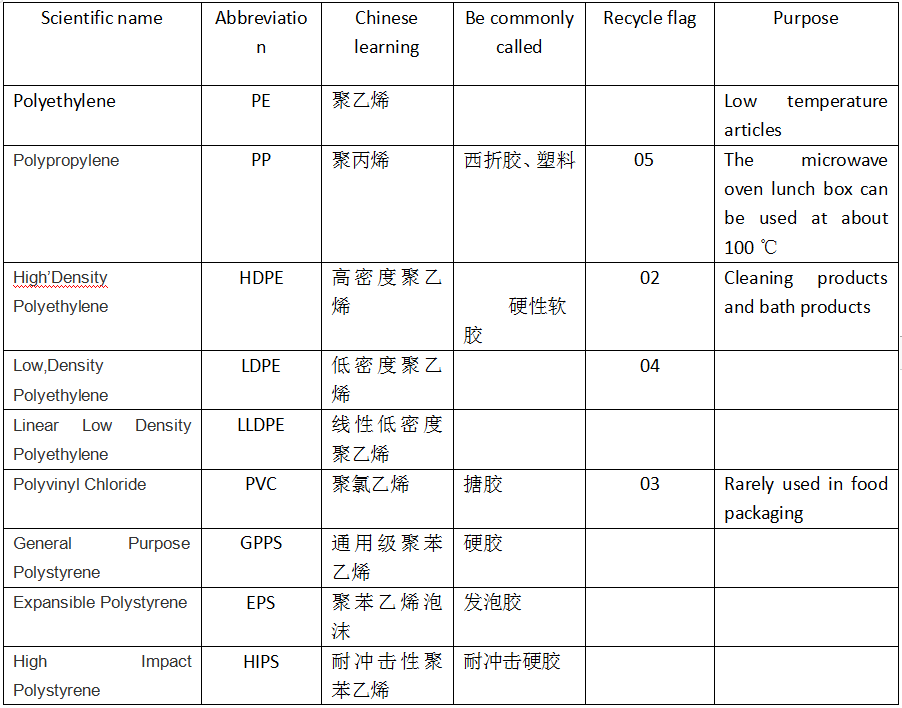
The form and calculation of molding shrinkage of thermoplastics are as described above. The factors affecting the molding shrinkage of thermoplastics are as follows:
1.1 Plastic varieties During the molding process of thermoplastics, there are still some factors such as volume change due to crystallization, strong internal stress, large residual stress frozen in the plastic parts, strong molecular orientation, etc., so compared with thermosetting plastics, the shrinkage rate is larger, the shrinkage rate range is wide, and the directivity is obvious. In addition, the shrinkage rate after molding, annealing, or moisture conditioning treatment is generally larger than that of thermosetting plastics.
1.2 Characteristics of plastic parts When the molten material contacts the cavity surface, the outer layer is immediately cooled to form a low-density solid shell. Due to the poor thermal conductivity of the plastic, the inner layer of the plastic part cools slowly to form a high-density solid layer with large shrinkage. Therefore, those with wall thickness, slow cooling and high-density layer thickness will shrink more. In addition, the presence or absence of inserts and the layout and quantity of inserts directly affect the material flow direction, density distribution and shrinkage resistance. Therefore, the characteristics of plastic parts have a greater impact on the shrinkage size and direction.
1.3 The form, size and distribution of the feed inlet directly affect the material flow direction, density distribution, pressure maintaining and feeding effect and forming time. The direct feed inlet and feed inlet with large section (especially thick section) have small shrinkage but large directivity, while the feed inlet with short width and length has small directivity. Those close to the feed inlet or parallel to the direction of material flow will have large shrinkage.
1.4 Molding condition The mold temperature is high, the molten material cools slowly, the density is high, and the shrinkage is large. Especially for the crystalline material, the shrinkage is larger because of its high crystallinity and large volume change. The mold temperature distribution is also related to the internal and external cooling and density uniformity of the plastic parts, which directly affects the size and direction of the shrinkage of each part. In addition, the holding pressure and time also have a greater impact on the shrinkage, and those with large pressure and long time have small shrinkage but large directivity. The injection pressure is high, the viscosity difference of molten material is small, the interlaminar shear stress is small, and the elastic rebound after demoulding is large, so the shrinkage can also be reduced appropriately. The material temperature is high, the shrinkage is large, but the directivity is small. Therefore, adjusting the mold temperature, pressure, injection speed, cooling time and other factors during molding can also appropriately change the plastic shrinkage.
During mold design, the shrinkage rate of each part of the plastic part shall be determined based on experience according to the shrinkage range of various plastics, the wall thickness and shape of the plastic part, the form, size and distribution of the feed inlet, and then the cavity size shall be calculated. For high-precision plastic parts and when it is difficult to master the shrinkage rate, the following methods should be generally used to design the mold:
① The outer diameter of plastic parts shall have a smaller shrinkage rate, and the inner diameter shall have a larger shrinkage rate, so as to leave room for correction after mold testing.
② The mold test determines the form, size and molding conditions of the gating system.
③ The plastic parts to be post-treated shall be subject to post-treatment to determine the size change (the measurement must be made 24 hours after demoulding).
④ Correct the mold according to the actual shrinkage.
⑤ Try the mold again and modify the shrinkage value slightly by changing the process conditions appropriately to meet the requirements of the plastic part.





Brief Introduction of Triangular Plastic Ware
The Development of the Times -- Plastics
Related Article

EU PPWR 2026: A Practical Compliance and Procurement Guide for Apparel, Footwear & Luggage Packaging

Understand multilayer co-extrusion for garment packaging: 3 vs 5 layers, material selection (PE, PA, EVOH), performance benefits, cost considerations, and supplier evaluation.
Multilayer Co-Extrusion in Garment Packaging: A Complete B2B Guide