How to Identify Genuine Compostable Packaging: A B2B Buyer's Verification Guide
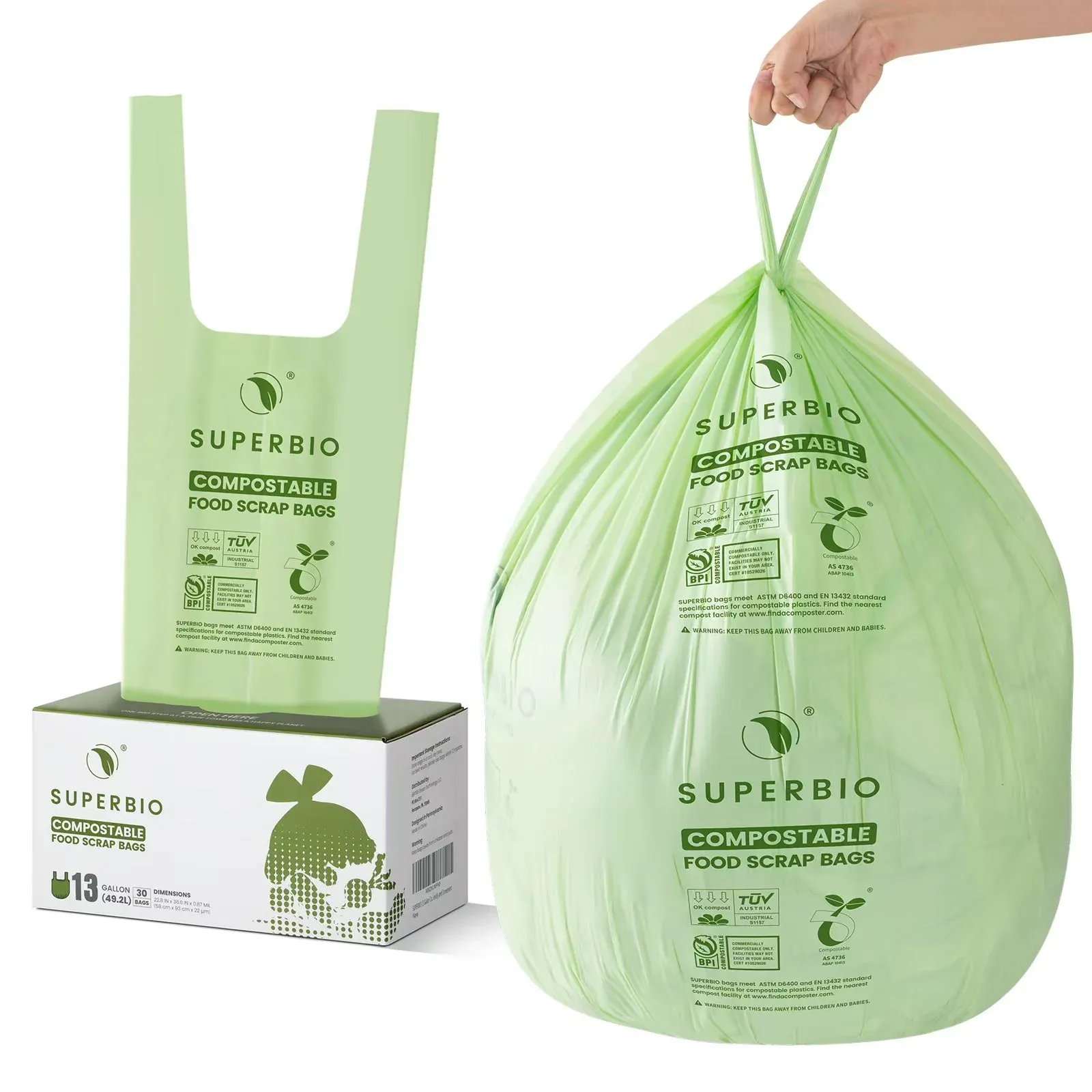
This guide provides a practical, science-based framework to verify genuine compostable packaging — covering certification standards (ASTM D6400, EN 13432, OK compost), supplier red flags, material performance, and a step-by-step verification checklist. Whether you're sourcing for sustainable fashion lines or transitioning your entire product packaging, this guide helps you make confident, defensible decisions.
Table of Contents
- 1. Why "Eco-Friendly" Labels Are Not Enough
- 2. Key Compostable Certifications Explained
- 3. How to Verify a Supplier's Compostable Claims
- 4. Compostable vs Traditional Plastic: A Comparison
- 5. Common Greenwashing Tactics & How to Spot Them
- 6. Material Performance & Technical Considerations
- 7. Supplier Verification Checklist
- 8. Frequently Asked Questions
Why "Eco-Friendly" Labels Are Not Enough
Terms like "green," "sustainable," or "environmentally friendly" are not regulated in many markets. They are marketing claims, not scientific or legal definitions.
A responsible packaging evaluation should consider the complete lifecycle:
- Material composition – What is the bag actually made from?
- Certification – Has a third-party verified its compostability?
- Application – Does the material perform in your supply chain?
- End-of-life system – Does your target market have the infrastructure to process it?
Key Compostable Certifications Explained
Certification is the most reliable way to verify compostability claims. However, not all certifications are equal. Each standard specifies different test conditions, timeframes, and environments.
| Certification | Region | Environment | Key Requirements |
|---|---|---|---|
| ASTM D6400 | USA (ASTM) | Industrial composting | 90% biodegradation within 180 days; disintegration; ecotoxicity |
| EN 13432 | Europe (CEN) | Industrial composting | 90% biodegradation within 180 days; disintegration; compost quality |
| OK compost INDUSTRIAL | Europe (TÜV Austria) | Industrial composting | Verifies EN 13432 compliance |
| OK compost HOME | Europe (TÜV Austria) | Home composting | Ambient temperature decomposition (more stringent) |
| BPI Certification | USA | Industrial composting | Verifies ASTM D6400 compliance |
| DIN-Geprüft Compostable | Germany/Europe | Industrial composting | Verifies EN 13432 compliance |
How to Verify a Supplier's Compostable Claims
Verification requires more than trusting a supplier's marketing brochure. Follow these steps to validate claims.
4-Step Verification Process
Step 1 — Request the full certification certificate
Not just a logo or a summary. Ask for the complete certificate from the issuing body. Confirm that the certificate covers the specific product you are purchasing (not just raw materials) and that it is currently valid.
Step 2 — Verify the certificate in the issuer's public database
Most certification bodies maintain public databases of certified products:
- BPI: products.bpiworld.org
- TÜV Austria (OK compost): www.tuv-at.be/green-marks/
- DIN CERTCO: www.dincertco.de
If the product is not listed, the claim may be invalid.
Step 3 — Request third-party test reports
Certification is the baseline; test reports provide deeper insight. Ask for biodegradation test results (percentage, time, temperature) and disintegration test reports.
Step 4 — Confirm certification scope
Does the certification cover the entire bag or just the raw material? Is the certification valid for your target market (EU vs US vs Asia)?
Compostable vs Traditional Plastic: A Comparison
| Evaluation Factor | Compostable Bags (Certified) | Traditional Plastic Bags (PE) |
|---|---|---|
| Raw material source | Often bio-based (PLA, PBAT, starch) | Fossil-based (petroleum) |
| Breakdown mechanism | Biological decomposition under specific conditions | Resistant to biodegradation (persists for centuries) |
| Required disposal environment | Industrial composting (or home compost if certified) | Recycling or landfill |
| Typical cost (vs PE) | 3-6× higher | Baseline (1.0×) |
| Shelf life | 6-18 months (requires careful inventory management) | 24+ months |
| Sustainability positioning | Strong, but dependent on infrastructure | Limited; increasingly challenged |
Common Greenwashing Tactics & How to Spot Them
5 Greenwashing Phrases to Watch For
| Claim | The Truth | How to Respond |
|---|---|---|
| “100% biodegradable” | Doesn't specify conditions or time — could take decades | Ask: “Under what conditions and in what timeframe?” |
| “Certified eco-friendly” | May be a self-declared or irrelevant certification | Ask for specific third-party certification and verify in public database |
| “Made from plant-based materials” | Bio-based ≠ compostable; PLA is bio-based but needs industrial composting | Distinguish between “renewable source” and “compostable end-of-life” |
| “Will degrade in landfill” | Most compostable materials do not degrade effectively in landfill | Ask for ASTM D5511 (landfill simulation) test data if landfill disposal is claimed |
| “Our product is the same but cheaper” | Likely lacks certification or uses lower-quality materials | Compare material specifications and certification scope — not just price |

Material Performance & Technical Considerations
Even a certified compostable bag must perform in real-world supply chains. Evaluate these technical factors before committing to a supplier.
| Parameter | PLA | PBAT | PLA/PBAT Blend | Traditional PE (Reference) |
|---|---|---|---|---|
| Industrial compost time (days) | 45-90 | 60-120 | 60-90 | Not biodegradable |
| Home compost suitability | Usually not | Some grades | Depends on formulation | Not applicable |
| Typical shelf life | 6-12 months | 12-18 months | 9-15 months | >24 months |
| Storage humidity limit | <60% RH | <65% RH | <65% RH | No special requirement |
| Apparel packaging suitability | Moderate (rigid) | Good (flexible) | Excellent | Excellent |
Need Help Verifying Your Supplier's Compostable Claims?
Our technical team can review your supplier's certifications, test reports, and material specifications — free of charge. We'll help you distinguish genuine compostable solutions from greenwashing.
Request a Verification Review →💬 Response within 2-4 hours. B2B technical support.
Supplier Verification Checklist
Use this checklist when evaluating compostable packaging suppliers.
- Certification verification — Supplier provides third-party certification (ASTM D6400, EN 13432, OK compost, BPI).
- Certificate scope — Certification covers the specific product being purchased, not just raw materials.
- Certificate validity — Certification is current and not expired.
- Public database listing — Product is listed in the certifying body's public database.
- Material composition — Supplier provides full material composition (PLA%, PBAT%, additives).
- Technical Data Sheet (TDS) — Available with physical properties (strength, elongation, seal strength).
- Shelf life & storage — Clear guidance on shelf life and storage conditions (temperature, humidity).
- Test reports — Third-party test reports for biodegradation (percentage, time, conditions).
- Performance samples — Supplier provides samples for real-world shipping and production line testing.
- Disposal guidance — Clear labeling and customer communication on proper disposal.
Frequently Asked Questions
Is compostable plastic the same as biodegradable plastic?
No. "Biodegradable" means a material can be broken down by microorganisms under suitable conditions. "Compostable" is a stricter subset — it means the material meets specific standards for decomposition under composting conditions (time, temperature, disintegration, and non-toxicity).
Does plastic fragmentation mean the plastic has disappeared?
No. Fragmentation only breaks plastic into smaller pieces. The material may still remain as microplastics. True biodegradation requires microorganisms to convert the material into natural compounds like CO₂, water, and biomass.
Can compostable bags decompose in nature?
Not necessarily. Most compostable packaging requires industrial composting conditions (55-60°C, controlled humidity) to break down. In a natural environment or landfill, they may degrade very slowly or not at all.
What certifications should I look for in compostable packaging?
Key certifications include ASTM D6400 (US, industrial compost), EN 13432 (Europe, industrial compost), OK compost HOME (Europe, home compost), and BPI (US verification). Always verify the certification covers your target market.
How can I verify a supplier's compostable claim?
Follow the 4-step verification process: (1) Request the full certificate, (2) Verify it in the issuer's public database, (3) Request third-party test reports, and (4) Confirm the certification scope matches your application.
What is the shelf life of compostable bags?
Typical shelf life ranges from 6 to 18 months depending on material composition and storage conditions — significantly shorter than traditional PE (24+ months). Store in cool, dry conditions (<60-65% RH) and use FIFO inventory rotation.
Are compostable bags suitable for apparel packaging?
Yes — when properly selected. PLA/PBAT blends offer an excellent balance of flexibility and strength for garment packaging. However, performance depends on material selection, thickness, and manufacturing quality. Always test samples under your actual shipping conditions.
Conclusion: Make Verification a Core Part of Your Sourcing Process
Genuine compostable packaging offers real environmental advantages — but only when selected with scientific rigor, verified with third-party certifications, and matched to the right disposal infrastructure. The difference between genuine compostability and partial degradation is one of the most important concepts in sustainable packaging.
A plastic material becoming smaller does not mean it has become environmentally harmless. The future of packaging requires better material design, scientific verification, and responsible end-of-life management.
For apparel brands, retailers, and manufacturers, sustainable packaging decisions should be based on real material behavior — not simple environmental labels. By understanding verification methods, certification standards, and the limitations of different materials, businesses can select packaging that balances environmental responsibility, product protection, cost efficiency, and supply chain reliability.
Ready to Verify Your Compostable Packaging Supplier?
Talk to our technical team for a free verification review of your supplier's certifications, test reports, and material specifications. We'll help you distinguish genuine solutions from greenwashing.
Switch to Fiber Bags: Lower Long-Term Costs & Higher Brand Value
Multilayer Co-extrusion Technology for Plastic Packaging Bags: Complete B2B Guide
Related Article