English
 简体中文
简体中文
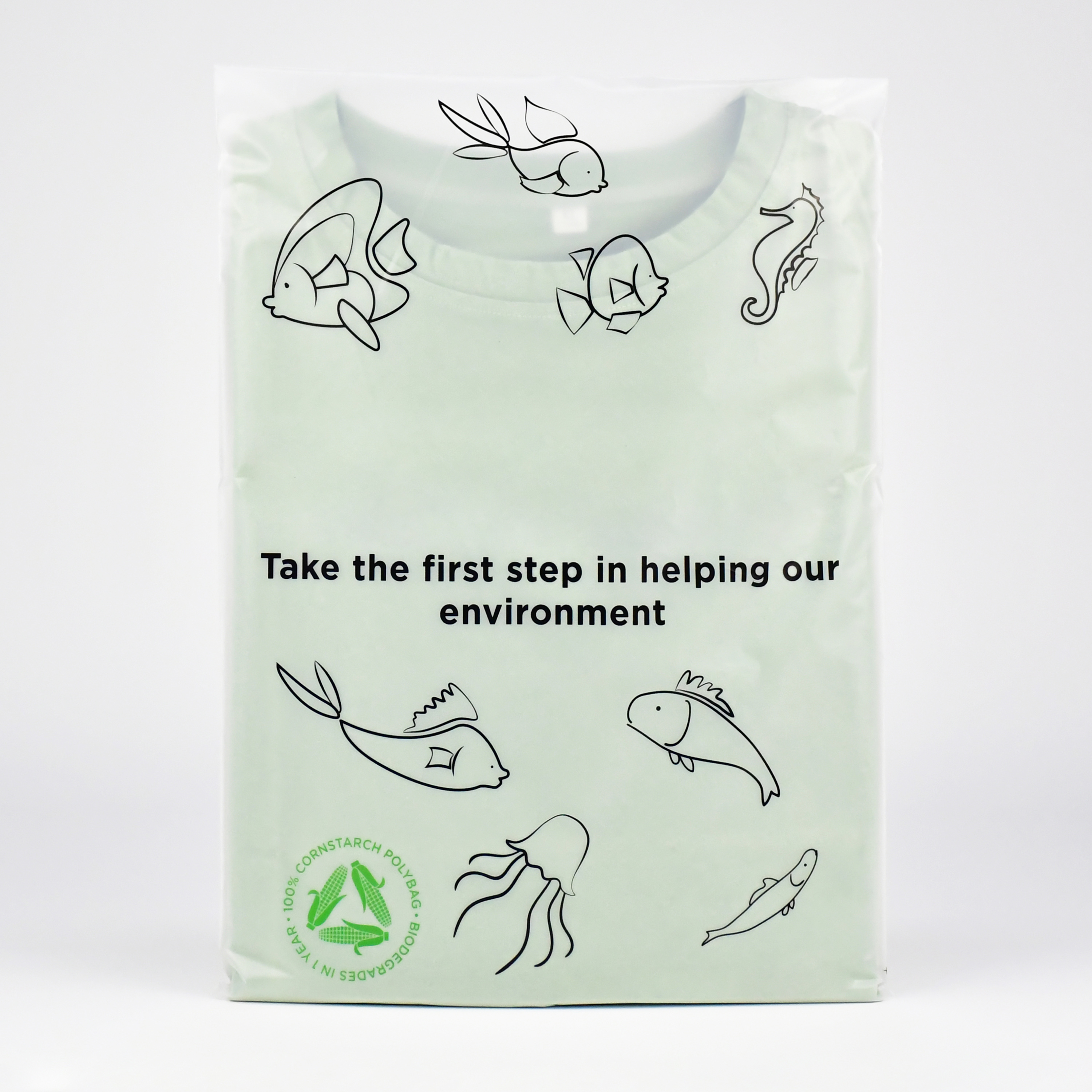
Are plastic bags degradable and can be discarded at will? NO!
27/06/2022
What she didn't know, however, was that these degradable garbage bags were not meant to degrade quickly in various environments, and their degradation often required the environmental conditions of industrial composting. The reality is that most of it ends up in incinerators or landfills.
In reality, there are not a few people like the netizen AA who take it for granted that "using biodegradable is equivalent to green environmental protection". According to a survey of 2,086 members of the public conducted in 2019 by the environmental protection organization "Get Out of Plastic Binding", only 20% of the public are aware of degradable plastics, which require certain environmental conditions to degrade. This, in turn, may bring increased plastic use and the risk of littering.
Recently, Shanghai Pudong Yike Circulation Science and Technology Promotion Center announced the "Summary of Evaluation of Application Effects of Degradable Plastics". From the perspective of clarifying the relevant concepts of degradable plastics, sorting out the degradation conditions of biodegradable plastics, and sorting out relevant domestic regulatory systems, it is recommended to apply and promote Degradable plastics should improve the standard system, conduct full life cycle assessment, and strengthen popular science education.
As the literal meaning is, the public has a cognitive bias towards degradable plastics
With the implementation of the new "Plastic Restriction Order" and the improvement of people's awareness of the ecological environment, degradable plastics, as an important part of my country's plastic pollution prevention and control work, have high expectations and good expectations. However, degradable plastic is actually a big concept that contains different kinds of plastics.
Zhang Miao, director of Shanghai Pudong Yike Circulation Technology Promotion Center, told reporters, "Taking traditional plastics as an example, commonly used plastic bags are PE, beverage bottles are PET, and plastic lunch boxes are usually PP, all of which are different types of polymers. There are also different kinds of plastic underneath the degradable plastic.”
According to GB/T20197-2006 "Definition, Classification, Marking and Degradation Performance Requirements of Degradable Plastics", the national standard for degradable plastics in my country, degradable plastics are divided into biodegradable plastics, compostable plastics, photodegradable plastics, and thermo-oxidative degradation. Four types of plastics.
However, unlike real degradable plastics, photodegradable or thermo-oxidative degradable plastics are based on the addition of photosensitizers or oxidation catalysts to traditional non-degradable plastics, and their degradability is controversial.
Mao Da, director of Shenzhen Zero Waste Environmental Protection Public Welfare Development Center and initiator of the "Non-toxic Pioneer" campaign, told reporters, "In reality, photodegradable or thermo-oxidative degradable plastics only accelerate the decomposition of the original plastics into smaller plastic fragments, not only It cannot be absorbed by the environment and will also cause microplastic pollution, which is harmful to the natural environment, especially the marine environment."
The EU issued the Single-Use Plastics Directive in 2019, which completely prohibits single-use plastic products made of oxidatively degradable plastics. And the newly revised national standard "Definition, Classification, Marking and Degradation Performance Requirements of Degradable Plastics (Discussion Draft)" also plans to delete photodegradable and thermo-oxidative degradable plastics.
Ji Junhui, a researcher and doctoral tutor at the Institute of Physical and Chemical Technology of the Chinese Academy of Sciences, told reporters: "At present, when academia or industry discuss degradable plastics, photodegradable and thermo-oxidative degradable plastics are generally not included."
However, even in the face of real biodegradable plastics, there is a big misunderstanding in the public's understanding.
Zhang Miao told reporters, "People often have such a misunderstanding that biodegradable plastics can degrade in any natural environment." In fact, according to different varieties, biodegradable plastics require different degradation conditions and requirements. . Degradation can only occur when the surrounding environment satisfies the conditions (such as microflora, temperature, humidity, etc.). However, the environmental conditions in different natural environments are very different, and some biodegradable plastics may be difficult to degrade in the natural environment.
"PLA (polylactic acid), which is widely used in daily necessities such as disposable packaging bags, fast food boxes, and non-woven fabrics, has always been popular because of its good biodegradability, but in fact, PLA can only be used in Degradation occurs only under the environmental conditions of industrial composting or anaerobic digestion. Misunderstandings about the degradation conditions are likely to cause people to discard biodegradable plastic waste at will, thereby polluting the environment.” Zhang Miao said.
The standard is aging, the recycling is unknown, and the development of degradable plastics faces several key problems
In fact, in front of degradable plastics, in addition to the public perception bias, there are also a series of key problems such as standard aging, lack, lag, weak supervision, mixed products, and unclear recycling and disposal methods.
Taking recycling as an example, the current policy clearly proposes the promotion and application of degradable plastics, but there are no regulations on the classification and recycling of degradable plastics.
The reporter inquired about garbage classification information in various places and learned that in Shanghai, degradable plastic bags are divided into dry garbage. In Beijing, degradable plastic bags are classified as other waste. This means that the ultimate fate of most degradable plastic bags is still the same as that of most traditional plastic bags - to be incinerated or landfilled.
Even in ideal conditions, degradable plastics are put into kitchen waste bins and transported to waste treatment plants for composting, but in practice, the degradation rate of degradable plastic products is far behind that of kitchen waste.
"Actually, our biggest enemy is not plastic or degradable plastic. The biggest enemy is disposable consumer culture." Mao Da emphasized, "We should vigorously advocate reducing the use of all non-essential disposables and prolonging the use as much as possible. A lifestyle for the lifespan of items, packaging.”
However, source reduction and recycling are not empty words. In the face of plastic pollution and the huge cost of recycling, degradable plastics still have an important stage and space to play their role if they can bring considerable social and environmental effects.
Ji Junhui told reporters, "Degradable plastics have very important applicable value for many traditional plastic products that are scattered in use, have low individual value, relatively high recycling costs, and are polluted during use and are not allowed to be recycled."
Zhang Miao told reporters that a very important application direction of degradable plastics is agricultural mulch. "For some areas where field operations are carried out, manual collection of these mulches is not possible, and mechanical collection inevitably produces some debris residue. In this case, it may indeed be more advantageous to use degradable plastics."
In addition, experts said that some packaging that comes into contact with food and plastic bags for kitchen waste are more suitable for degradable plastics. In some special occasions that are not easily mixed with traditional plastic waste during recycling, degradable plastics can also be used preferentially, such as tea bags, coffee capsules, and fast food boxes provided in large-scale events. For industries such as food delivery and express delivery, it is more difficult to use degradable materials on a large scale, and more attention should be paid to the reusability of packaging products.
Fine management, clear degradable plastic application scenarios
Zhang Miao suggested that, based on the review of existing policies, regulations and research, the following issues should be focused on the current application of degradable plastics in my country.
First, the relevant competent departments should further improve the relevant standards and labeling systems, and conduct strict inspections by the industry and commerce departments to avoid confusion in the degradable plastics market. It is recommended that in the label, in addition to labeling the category name and ingredients, the degradation conditions should be clearly indicated, which is more convenient for ordinary merchants and consumers to choose.
The second is to conduct relevant full life cycle assessments of various degradable plastics in different application scenarios. Decision makers can scientifically promote degradable plastics based on the assessment results, so that degradable plastics can truly reduce plastic pollution and reduce environmental impact.
The third is that relevant institutions and organizations should strengthen the popularization of the public, so that businesses and consumers have a clear understanding of degradable plastics, and reasonably choose degradable plastic products.
With the increasing awareness of plastic pollution control and degradable plastics, my country's policy on degradable plastics is becoming more refined. In 2021, the "14th Five-Year Plan" Action Plan for the Control of Plastic Pollution proposed to "promote alternative plastic products scientifically and prudently", fully consider the resource and environmental impact of the whole life cycle of degradable plastic products, and carry out research on the degradation mechanism and impact of different types of degradable plastics , scientific evaluation of its environmental safety and controllability. In Zhang Miao's view, this is a more cautious and scientific attitude for the degradable plastics industry.
At present, the State Administration for Market Regulation and China National Standardization Committee have released GB/T 41010-2021 "Biodegradable Plastics and Products Degradation Performance and Labeling Requirements" in November 2021, which clearly defines the labeling of biodegradable plastic products. It will come into effect on June 1, 2022.
According to the new standard, degradable plastic signs should be composed of text and graphic signs in the future, including material, degradation environmental conditions, product standard number, product name, etc.
However, Zhang Miao said that this standard is a recommended national standard, not a mandatory standard with legal attributes.
In addition, Ji Junhui also said that the new standard does not manage products and usage scenarios, and requires more refined management by administrative departments or industry management departments to solve the problem of promotion and application of degradable plastics.