Why Is PBAT Added to Biodegradable Bags? Understanding Its Role in Sustainable Packaging

This guide explains everything B2B buyers need to know about PBAT in biodegradable plastic bags: what it is, why it's added, how it works with PLA and other materials, and — most importantly — how to evaluate PBAT-based packaging for your specific application.
Table of Contents
- 1. What Is PBAT Material?
- 2. Why Can't Biodegradable Bags Use Only PLA?
- 3. What Role Does PBAT Play in Biodegradable Bags?
- 4. PBAT Performance Data: Key Technical Specifications
- 5. How Much PBAT Should a Biodegradable Bag Contain?
- 6. PBAT vs PLA vs Traditional Plastic: A Comparison
- 7. Common Misunderstandings About PBAT
- 8. How to Evaluate PBAT Packaging Suppliers
- 9. Frequently Asked Questions
What Is PBAT Material?
PBAT (Polybutylene Adipate Terephthalate) is a biodegradable thermoplastic polyester commonly used in sustainable polymer systems. It belongs to the aliphatic-aromatic copolyester family, combining flexible segments (for elasticity) with aromatic segments (for strength and durability).
Key characteristics of PBAT include:
- High flexibility — Enables soft, foldable bags
- Excellent toughness — Resists tearing and impact
- High elongation — Stretches without breaking
- Good film-forming properties — Suitable for blown film extrusion
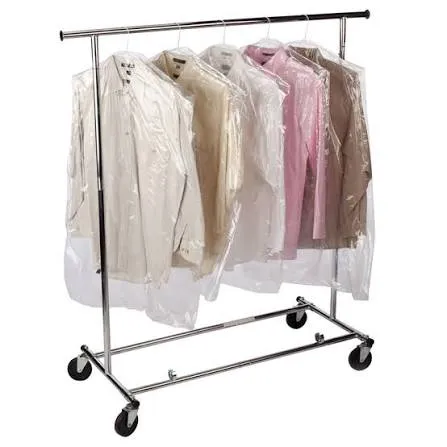
Common applications include compostable shopping bags, biodegradable garbage bags, agricultural films, and flexible packaging — especially for apparel and retail.
Why Can't Biodegradable Bags Use Only PLA?
PLA (Polylactic Acid) is the most widely known biodegradable polymer. It offers excellent transparency, stiffness, and renewable sourcing (from corn or sugarcane).
However, PLA has critical limitations for flexible packaging:
- Brittleness — PLA is stiff and can crack or shatter under stress
- Low flexibility — It doesn't fold or bend easily
- Poor impact resistance — Bags can break during handling
- Narrow processing window — Requires precise temperature control
This is why material blending matters. By combining PLA with PBAT, manufacturers can achieve a balanced material that offers both sustainability and real-world performance.
What Role Does PBAT Play in Biodegradable Bags?
1. Improves Flexibility and Softness
PBAT significantly enhances the softness and flexibility of biodegradable films. This is especially important for garment bags, shopping bags, and mailers that need to fold, drape, and handle like traditional plastic.
2. Increases Tear Resistance and Toughness
Packaging must survive transportation and handling. PBAT improves tear resistance, impact strength, and stretchability — reducing the risk of bag failure during shipping.
3. Enhances Film Manufacturing Performance
PBAT improves extrusion stability and film formation, making it easier to produce consistent, high-quality bags at scale. This is critical for commercial production.
4. Supports Biodegradation
PBAT is a biodegradable polyester that, under suitable industrial composting conditions, breaks down into natural compounds (CO₂, water, and biomass) through microbial activity.
PBAT Performance Data: Key Technical Specifications
For B2B buyers, understanding the quantitative performance of PBAT helps in evaluating material options and supplier capabilities.
| Property | PBAT (Typical) | PLA (Typical) | LDPE (Reference) |
|---|---|---|---|
| Density (g/cm³) | 1.18 – 1.26 | 1.24 | 0.92 |
| Tensile Strength (MPa) | 20 – 35 | 40 – 60 | 10 – 25 |
| Elongation at Break (%) | > 500 | 3 – 6 | > 300 |
| Melting Temperature (°C) | 110 – 120 | 150 – 180 | 105 – 115 |
| Glass Transition Temperature (°C) | ~ -30 | 55 – 60 | ~ -125 |
| Industrial Compost Time (days) | 60 – 120 | 45 – 90 | Does not biodegrade |
How Much PBAT Should a Biodegradable Bag Contain?
There is no universal "correct" PBAT percentage. The optimal ratio depends on the specific application, performance requirements, and cost targets.
PBAT/PLA Blend Ratio Guide
| Application | Recommended PBAT Content | Performance Profile |
|---|---|---|
| Rigid packaging (trays, containers) | 0 – 10% | Shape retention, stiffness |
| Light-duty garment bags, shopping bags | 20 – 30% | Balanced flexibility and cost |
| Flexible garment bags, poly mailers | 30 – 40% | High flexibility, tear resistance |
| High-elongation films (stretch applications) | 50%+ | Maximum elasticity |
Note: Higher PBAT content generally increases material cost. The right ratio balances performance needs with budget constraints.
PBAT vs PLA vs Traditional Plastic: A Comparison
| Factor | PBAT-Based Bags | PLA-Based Bags | Traditional PE Bags |
|---|---|---|---|
| Material source | Fossil-based or partially bio-based | Renewable (corn, sugarcane) | Fossil-based |
| Flexibility | Excellent | Poor (brittle) | Excellent |
| Tear resistance | Good | Moderate | Excellent |
| Biodegradation | Yes (industrial compost) | Yes (industrial compost) | No |
| Typical cost (vs PE) | 3 – 6× | 2 – 4× | 1× (baseline) |
| Shelf life | 12 – 18 months | 6 – 12 months | 24+ months |
| Apparel packaging suitability | Excellent (when blended) | Poor (needs PBAT) | Excellent |
Common Misunderstandings About PBAT
4 PBAT Myths — Debunked
❌ Myth 1: "PBAT means the bag will disappear anywhere"
✅ Fact: PBAT requires industrial composting conditions (55-60°C, controlled humidity) to biodegrade. It will not disappear quickly in a landfill or natural environment.
❌ Myth 2: "PBAT is the same as traditional plastic"
✅ Fact: Although both are polymers, PBAT has a different chemical structure and is designed for biodegradation under specific conditions.
❌ Myth 3: "More PBAT always means better performance"
✅ Fact: Higher PBAT content increases flexibility and cost, but may reduce stiffness. The optimal ratio depends on the application.
❌ Myth 4: "All PBAT is the same"
✅ Fact: Different PBAT grades from different suppliers (BASF ecoflex®, Kingfa, Bluesail) can have different properties. Ask your supplier about their specific PBAT source.
Not Sure Which PBAT/PLA Ratio Fits Your Packaging?
Our technical team can analyze your product requirements and recommend an optimized formulation — balancing flexibility, durability, cost, and sustainability. Free material consultation available.
Request a Material Consultation →💬 Response within 2-4 hours. B2B technical support.
How to Evaluate PBAT Packaging Suppliers
Use this checklist when evaluating suppliers offering PBAT-based biodegradable packaging.
- PBAT/PLA ratio — Supplier provides the specific blend ratio and can explain why it was chosen for your application.
- PBAT source — Supplier identifies their PBAT supplier (BASF, Kingfa, Bluesail, or other) and can demonstrate supply stability.
- Technical Data Sheet (TDS) — Supplier provides complete material properties (strength, elongation, seal strength).
- Third-party certification — Supplier holds valid certifications (EN 13432, ASTM D6400, OK compost) for the specific product.
- Test reports — Supplier can provide biodegradation test results and mechanical performance data.
- Processing capability — Supplier has experience manufacturing PBAT/PLA films and can advise on equipment compatibility.
- Shelf life & storage — Supplier provides clear guidance on shelf life (typically 6-18 months) and storage conditions.
- Samples — Supplier provides pre-production samples for real-world testing.
8 Questions to Ask Your PBAT Packaging Supplier
- What is the PBAT/PLA ratio in your formulation?
- Who supplies your PBAT material? (BASF, Kingfa, Bluesail, or other?)
- What are the tensile strength, elongation, and seal strength values for this formulation?
- Can you provide a Technical Data Sheet (TDS) and third-party test reports?
- What industrial composting conditions are required for biodegradation?
- What is the shelf life and recommended storage conditions?
- Is this formulation certified under EN 13432 or ASTM D6400?
- Can you provide samples for automatic packaging line testing?
Frequently Asked Questions About PBAT
Why is PBAT added to biodegradable plastic bags?
PBAT is added to improve flexibility, toughness, tear resistance, and film processing performance — properties that biodegradable materials like PLA lack when used alone.
Is PBAT a biodegradable material?
Yes. PBAT is a biodegradable polyester designed to break down under suitable industrial composting conditions.
Why is PBAT mixed with PLA?
PLA provides stiffness and transparency, while PBAT provides flexibility and toughness. Together, they create a balanced material suitable for flexible packaging.
Are PBAT bags suitable for clothing packaging?
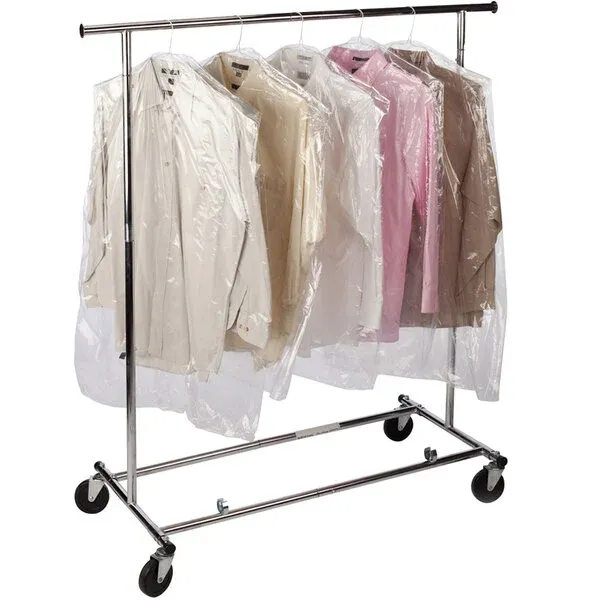
Yes. PBAT/PLA blends offer the flexibility, softness, and durability required for garment bags, fashion packaging, and e-commerce mailers.
Does PBAT make biodegradable bags more expensive?
Generally, yes. PBAT is typically 20-50% more expensive than PLA, and significantly more expensive than PE. However, the right formulation balances cost with the required performance and sustainability benefits.
How long does PBAT take to biodegrade?
In industrial composting conditions (55-60°C, controlled humidity), PBAT typically biodegrades within 60-120 days. It does not biodegrade quickly in landfills or natural environments.
What is the shelf life of PBAT/PLA bags?
Typically 6-18 months, depending on the formulation and storage conditions (cool, dry, away from UV). This is significantly shorter than PE bags (24+ months).
Conclusion: PBAT Is an Engineering Solution, Not a Marketing Claim
PBAT is not added to biodegradable plastic bags simply to make them "more environmentally friendly." Its main role is solving a practical packaging challenge: how to make biodegradable materials flexible, tough, and manufacturable enough for real-world applications.
By improving flexibility, tear resistance, film processing, and packaging usability, PBAT helps create more balanced biodegradable packaging solutions that actually work in commercial supply chains.
For companies evaluating sustainable packaging, understanding material composition is essential. The right solution depends on material science, manufacturing capability, application requirements, and verified sustainability performance — not just the presence or absence of PBAT.
Ready to Evaluate PBAT-Based Packaging for Your Brand?
Talk to our technical team for a free material consultation — we'll help you determine the optimal PBAT/PLA ratio for your product, request samples, and verify supplier certifications.
Biodegradable Non-Woven Bags for Smart Appliance Packaging: A Complete B2B Guide
Bio-Based Materials: A Sustainable Alternative To Traditional Plastics
Related Article