Degradable Fiber vs Plastic Bags: A B2B Apparel Guide
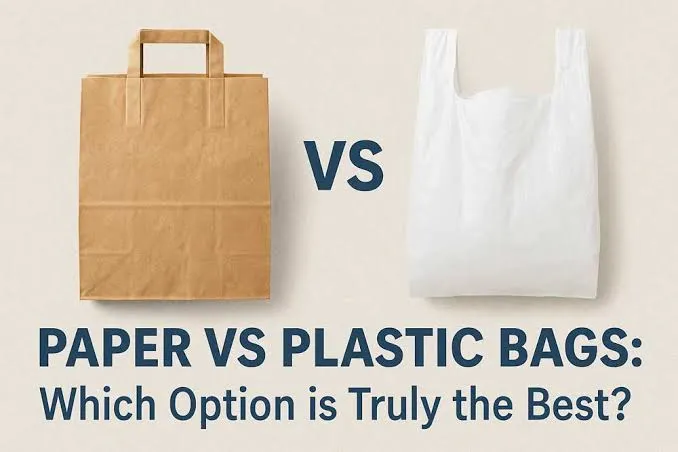
This comprehensive guide compares degradable fiber bags and traditional PE plastic bags across material science, technical performance (strength, moisture resistance, shelf life), environmental impact, total cost of ownership (TCO), and supplier selection. By the end, you will have a clear, data-driven framework to decide which packaging solution truly fits your product type, sales channel, and sustainability goals.
Table of Contents
- 1. Why the Shift to Sustainable Packaging Is Accelerating
- 2. Material Definitions: PE Plastic vs. Degradable Fiber
- 3. Technical Performance: Head-to-Head Comparison
- 4. Environmental Reality: Certifications & Waste Infrastructure
- 5. Cost Analysis: Unit Price vs. Total Cost of Ownership
- 6. Application Decision Matrix (By Business Type)
- 7. Manufacturing Process & Supplier Selection Checklist
- 8. Frequently Asked Questions
Why the Shift to Sustainable Packaging Is Accelerating
Three powerful forces are compelling apparel brands to look beyond traditional plastic:
- Regulatory Pressure: The EU's PPWR mandates that all packaging must be recyclable or reusable by 2030. Similar regulations are emerging in North America and Asia (e.g., China's plastic ban roadmap).
- Retailer Requirements: Major retailers are embedding sustainability into supplier scorecards. Failure to offer eco-friendly packaging can result in delisting.
- Consumer Perception: In DTC e-commerce, packaging is the first physical brand touchpoint. A 2025 McKinsey survey found that 60% of consumers are willing to pay a premium for sustainable packaging.
Material Definitions: PE Plastic vs. Degradable Fiber
Traditional Plastic Bags (PE)
Polyethylene (PE) bags are the industry workhorse. Made from fossil-based polymers, they offer high tensile strength (25-35 MPa), excellent moisture resistance (WVTR < 5 g/m²/day), and a shelf life of over 2 years. They are cheap to produce and run seamlessly on high-speed automatic packaging lines.
Degradable Fiber Bags
These are packaging solutions made from renewable or alternative materials. However, not all "degradable" bags are the same. Here is the crucial terminology breakdown:
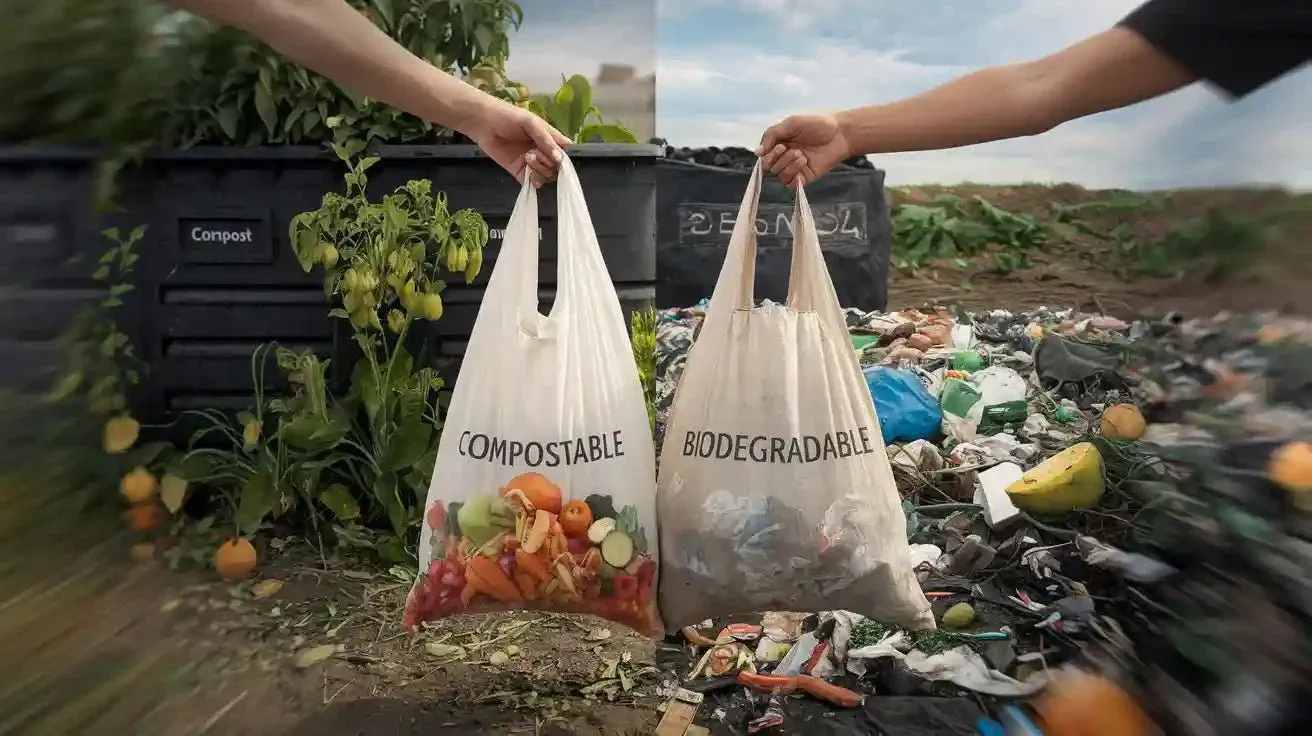
📖 Terminology Clarification:
- Bio-based: Made from renewable sources (e.g., corn starch, sugarcane). Does NOT mean biodegradable.
- Compostable (Industrial): Breaks down in specific industrial facilities (55°C+). Requires certifications like EN 13432 (EU) or ASTM D6400 (US).
- Home Compostable: Breaks down in backyard compost (lower temperature). Stricter standard (e.g., OK compost HOME).
- Oxo-degradable: Traditional plastic with additives to fragment. Highly controversial and banned in the EU due to microplastic concerns.
Professional Advice: Always verify which specific type your supplier offers. "Degradable" alone is not a valid environmental claim.
Technical Performance: Head-to-Head Comparison
Performance determines if packaging survives the rigors of garment manufacturing, ocean freight, and last-mile delivery. Below are typical technical parameters:
| Parameter | Traditional PE Bag (0.03mm) | Fiber/Bio-based Bag | Impact on Apparel Usage |
|---|---|---|---|
| Tensile Strength (MD) | 25 – 35 MPa | 15 – 30 MPa | Fiber bags may tear more easily on sharp corners (e.g., zippers, rivets). |
| Tear Resistance | 800 – 1200 mN | 400 – 800 mN | Heavy garments (jeans) require thicker fiber gauge. |
| WVTR (Moisture) | < 5 g/m²/day | 10 – 200 g/m²/day | Fiber bags often need coating for ocean freight. |
| Heat Seal Strength | 2.5 – 4.0 N/15mm | 1.5 – 3.0 N/15mm | Narrower sealing window (±5°C vs PE's ±15°C). |
| Shelf Life (Stability) | > 24 months | 6 – 18 months | Apply FIFO inventory management for fiber bags. |
Environmental Reality: Certifications & Waste Infrastructure
Sustainability benefits depend heavily on how the bag is disposed of. Here is the critical reality check:
- Industrial Composting: Compostable bags require industrial facilities. If your target market (e.g., certain US states) lacks these facilities, the bag will likely go to landfill or incineration, negating the benefit.
- Recycling: Bio-based PE (e.g., Braskem's I'm green™) can be recycled in standard PE streams, making it a more practical "drop-in" solution.
- Greenwashing Risk: Ensure your supplier provides third-party certifications. Without certification, your marketing claims are legally vulnerable.
Requirement by Region:
- EU: EN 13432 for compostability. REACH compliance for chemicals.
- US: ASTM D6400 for compostability. FTC Green Guides for marketing claims.
- Global: GRS (Global Recycled Standard) for recycled content.
Cost Analysis: Unit Price vs. Total Cost of Ownership
A common misstep is comparing only the unit bag price. Here is a Total Cost of Ownership (TCO) framework:
- PE Bag: ~$0.04/unit (high-volume). Low TCO due to zero line adjustments, long shelf life, and reliable protection.
- Fiber Bag: ~$0.12 – $0.20/unit (depending on certification). Higher TCO due to material cost and potential line downtime.
ROI Scenario Example:
Suppose a brand uses 1,000,000 bags annually. Switching to fiber adds $80,000 in direct material cost. However, this switch helps secure a contract with a European retailer worth $200,000 in additional revenue, and reduces potential fines for non-compliance. Net positive ROI.
Formula: Total Annual Cost = (Bag Price × Volume) + (Labor × Packing Time) + (Downtime Loss) + (Brand/Compliance Value).
Application Decision Matrix (By Business Type)
There is no one-size-fits-all answer. Use this matrix to identify your best fit:
| Business Type | Primary Priority | Recommended Solution |
|---|---|---|
| High-Volume Factory (Basic T-shirts) | Cost, Speed, Durability | Traditional PE Bags |
| DTC E-commerce Brand | Shipping Efficiency + Brand Unboxing | Bio-based PE (Recyclable) or Coated Fiber |
| Luxury / Premium Fashion | Aesthetics + Material Story | Custom Printed Compostable Fiber (with certifications) |
| Sustainable / B-Corp Brand | ESG Compliance & Transparency | Industrial Compostable (EN 13432) + clear disposal instructions |
| Export to EU | Regulatory Compliance | Certified Recyclable or Compostable (meeting PPWR standards) |
Manufacturing Process & Supplier Selection Checklist
Switching materials is a project, not a purchase. Here is a 6-Step Action Plan and Checklist to guide your transition:
✅ Supplier Evaluation & Transition Checklist
- Step 1 – Define Requirements: Determine required strength (grams), moisture protection (WVTR), and printing quality for your specific garments.
- Step 2 – Request Samples: Do not rely on photos. Test physical samples on your actual filling lines.
- Step 3 – Verify Certifications: Request COA (Certificate of Analysis) and third-party test reports (e.g., SGS, Intertek).
- Step 4 – Analyze TCO: Use the formula above. Calculate if line speed changes affect your labor costs.
- Step 5 – Batch Trial: Run a pilot batch (e.g., 5,000 units) through your full supply chain to check durability.
- Step 6 – Supplier Audit (Virtual/Physical): Check if the factory has dedicated machinery for fiber materials (e.g., lower temperature extruders).
Get a Custom Packaging Assessment & Free Sample Kit
Our technical team will analyze your garments, shipping routes, and line speed to recommend the optimal material—whether premium fiber or high-performance PE.
💬 Response within 4 hours. Samples shipped globally.
Why Supplier Experience Matters
Fiber materials require specific extrusion temperatures (140-170°C vs PE's 180-220°C) and precise heat-seal settings. Suppliers without dedicated fiber production lines often deliver inconsistent thickness (±0.005mm tolerance vs the required ±0.002mm), leading to sealing failures. Choose a supplier who has run fiber materials for at least 2-3 years.
Frequently Asked Questions (FAQ)
Are degradable fiber bags stronger than plastic?
No, generally not. Traditional PE has superior tensile strength and tear resistance. If you ship heavy garments with sharp accessories (zippers, rivets), fiber bags require a heavier gauge (≥0.05mm), which increases cost.
What is the cost difference?
Typically, fiber bags cost 2-5x more than PE bags. However, price gaps are narrowing as demand scales. Always calculate TCO, not just unit price.
How long do degradable bags take to decompose?
Industrial compostable: 90-180 days under controlled conditions. Home compostable: 3-6 months in backyard conditions. Oxo-degradable: Does not fully decompose; fragments into microplastics.
Can I custom print on degradable fiber bags?
Yes, but you need water-based or bio-based inks. Solvent-based inks can degrade the biopolymer structure. Ensure your supplier has experience with sustainable printing.
Conclusion: The Future Is Hybrid
The choice between degradable fiber and plastic is not binary. For high-volume, cost-sensitive basics shipping domestically, high-performance PE (or bio-based PE) remains the most logical choice. For premium, eco-conscious products exported to regulated markets (EU), certified compostable fiber bags offer a competitive edge.
The key takeaway: Test rigorously, calculate TCO, and partner with an experienced manufacturer. Packaging should protect your product, comply with upcoming laws, and enhance your brand story—without breaking your budget.
About the Author: This guide is compiled by the packaging engineering team at Goolien, specializing in customized apparel packaging solutions. With over 15 years in the industry, we help brands navigate the transition to sustainable packaging without compromising operational efficiency.
Disclaimer: Technical specifications are typical values and may vary by manufacturer. Always request specific COAs for your chosen material batch.
How Plastic Bags Biodegrade: A Science Guide for Apparel Packaging Buyers
Ultimate Guide to Clothing Packaging Bags: Types, Materials & How to Choose the Right Supplier
Related Article