Self-Adhesive, Grip Seal or Slider Zipper Bags: Which Is Right for Your Products?
Self-Adhesive, Grip Seal or Slider Zipper Bags: Which Is Right for Your Products?
Choosing the right packaging bag involves more than selecting a material or size. The closure structure also affects how the bag is sealed, how easily it can be reopened, and how it performs throughout its intended use.
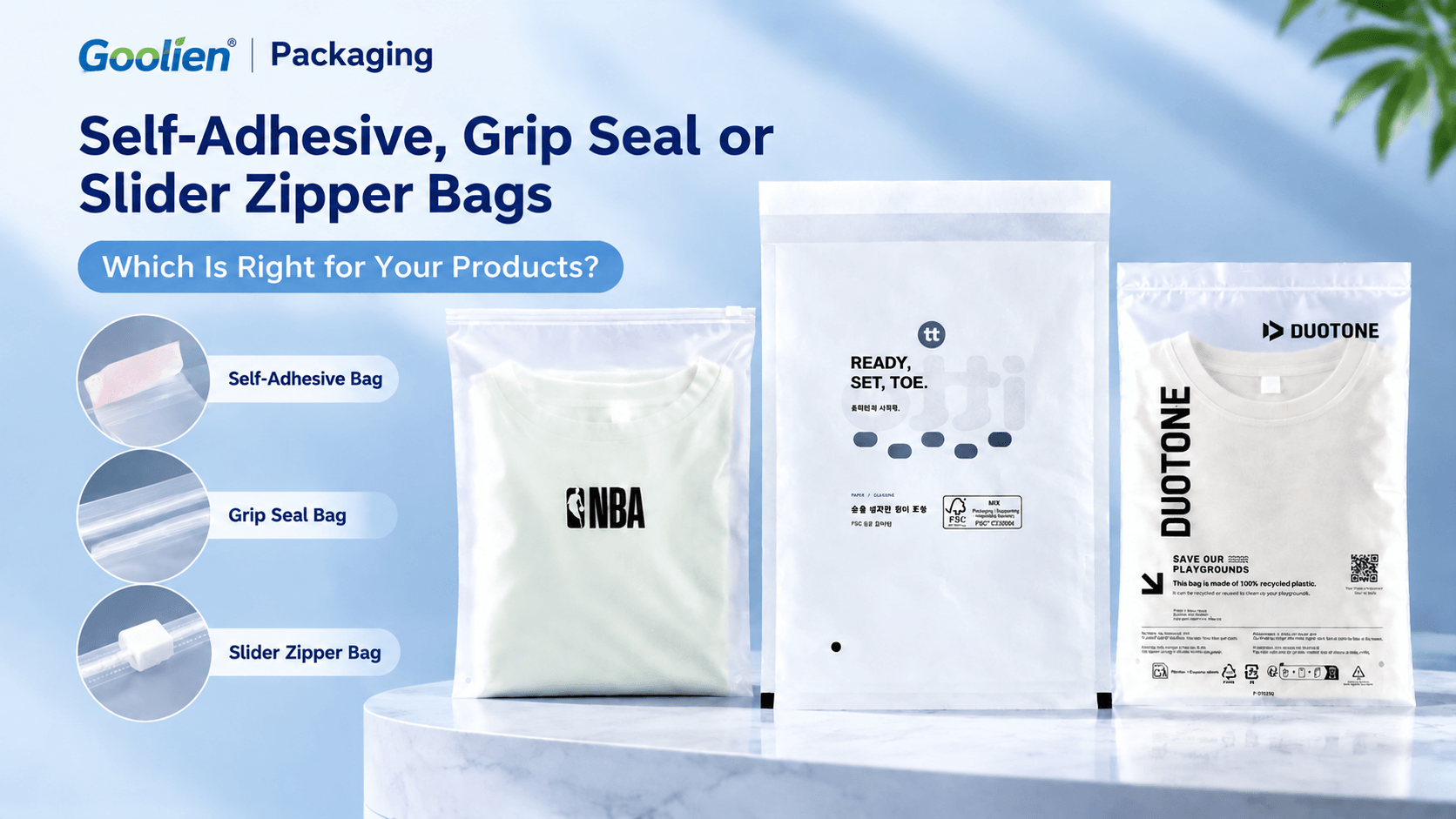
Self-adhesive bags, grip seal bags, and slider zipper bags are three common options for apparel and accessory packaging. Although they serve similar purposes, their closure mechanisms, operating methods, and structural requirements are different.
For apparel brands and packaging buyers, understanding these differences helps identify a packaging solution that meets product requirements while providing a practical user experience.
1. Frequently Asked Questions
Q1: Why Do Packaging Bags Sometimes Fail to Close Properly?
Closure problems can result from unsuitable components, inaccurate structural alignment, inconsistent manufacturing, or improper operation.
For self-adhesive bags, insufficient bonding or unsuitable adhesive selection may affect sealing performance. For grip seal bags, misaligned or incompletely engaged profiles may leave sections of the opening unclosed. For slider zipper bags, incompatible components or inaccurate slider installation may cause difficult movement or incomplete closure.
Therefore, closure design and manufacturing quality should be evaluated together.
Q2: When Should Brands Choose Adhesive Sealing Instead of Reclosable Packaging?
The decision depends on how the packaging will be used after the product is packed.
If the main requirement is to seal the product for delivery, a self-adhesive bag provides a straightforward solution. If customers need to access the contents repeatedly, grip seal and slider zipper bags offer reusable closure mechanisms.
Brands should consider the entire usage process, from factory packing to product storage and customer handling.
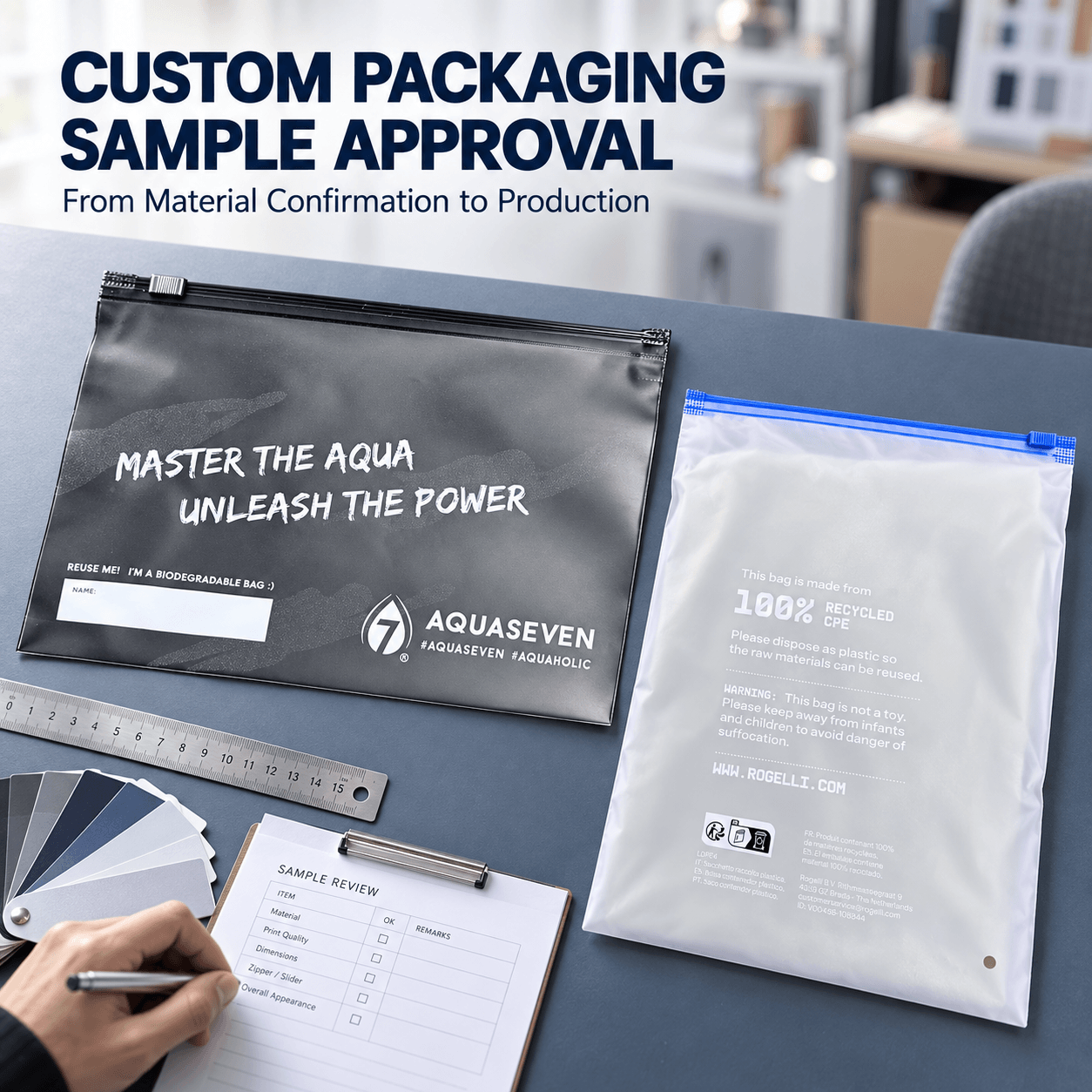
Q3: What Should Buyers Check Before Approving a Custom Packaging Bag?
Buyers should evaluate actual samples rather than relying on the closure design alone.
Self-adhesive bags should be checked for adhesive bonding and flap adhesion. Grip seal bags require evaluation of profile engagement and repeated opening. Slider zipper bags should be checked for smooth slider movement and consistent closure.
Bag dimensions, film properties, and compatibility with the intended product should also be considered before mass production.
2. Understanding the Three Closure Structures
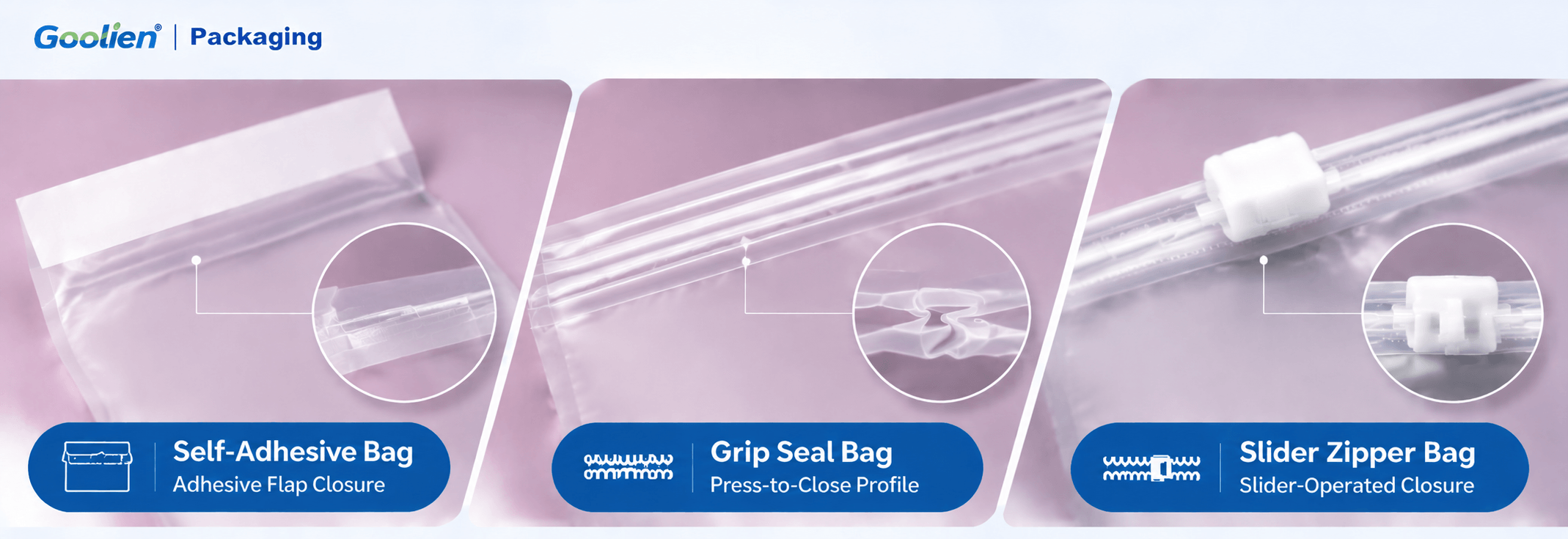
The main difference between these three bag types lies in how their openings are closed and reopened. Each structure has different components and requires specific design considerations.
1. Self-Adhesive Bags
Self-adhesive bags feature an adhesive strip on a fold-over flap. After placing the product inside, users remove the release liner and press the flap against the bag body to complete the seal.
This structure relies on adhesive bonding rather than mechanical engagement.
Key structural features:
- An adhesive strip positioned on the fold-over flap.
- A release liner that protects the adhesive before use.
- Flap length and bonding area that influence the sealing design.
- Adhesive compatibility with the film material.
The adhesive should provide consistent bonding under the intended application conditions. Incorrect positioning, surface contamination, or unsuitable adhesive selection may affect the final sealing result.
2. Grip Seal Bags
Grip seal bags feature two interlocking plastic profiles along the opening. Pressing the profiles together closes the bag, while pulling them apart allows it to reopen.
The closure relies on the alignment and engagement of the two profiles rather than adhesive bonding.
Key structural features:
- Two interlocking profiles along the opening.
- Direct manual press-to-close operation.
- Reusable closure without replacing an adhesive strip.
- Profile alignment and engagement that determine closure consistency.
An important consideration is whether the profiles engage evenly across the entire opening. Partial engagement may leave certain sections insufficiently closed, even when the bag appears closed at first glance.
3. Slider Zipper Bags
Slider zipper bags combine interlocking zipper profiles with a movable slider. Moving the slider along the opening engages or separates the profiles.
Unlike a standard grip seal, the slider provides a guided opening and closing mechanism.
Key structural features:
- Interlocking zipper profiles.
- A movable slider installed along the opening.
- Guided operation for opening and closing.
- Component compatibility and installation accuracy that affect performance.
The relationship between the slider and zipper profiles is particularly important. Poor matching or inaccurate installation may cause excessive resistance, uneven movement, or incomplete closure.
3. Comparing Closure Performance in Practical Use
The three structures should be compared according to their actual operating characteristics, not simply their appearance.
| Evaluation Factor | Self-Adhesive Bag | Grip Seal Bag | Slider Zipper Bag |
|---|---|---|---|
| Closure principle | Adhesive bonding | Profile engagement | Slider-operated engagement |
| Opening method | Peel open | Pull profiles apart | Move slider |
| Reclosing | Depends on adhesive design | Designed for repeated use | Designed for repeated use |
| Main performance concern | Bonding consistency | Profile engagement | Slider and profile compatibility |
| Operating experience | Simple initial sealing | Manual press-to-close | Guided sliding operation |
| Main components | Adhesive strip and liner | Interlocking profiles | Profiles and slider |
| Key design consideration | Adhesive and flap design | Profile alignment | Slider installation and matching |
Each structure addresses different packaging requirements.
Self-adhesive bags focus on straightforward initial sealing. Grip seal bags rely on direct engagement between two profiles, while slider zipper bags use a movable component to guide the opening and closing process.
It is also important to distinguish ordinary closure functionality from airtight or leakproof protection. These features should not be assumed without appropriate product-specific testing.
4. How to Choose the Right Closure Structure for Your Products?
Rather than matching a particular bag type to a specific garment, buyers should evaluate the actual packaging requirements. Three factors are particularly important.
1. Closure Requirements
First, consider whether the packaging mainly needs to remain sealed after packing or whether it will need to be opened multiple times.
For products that are generally sealed once for delivery, self-adhesive bags provide a straightforward closure method.
When repeated access is required, grip seal and slider zipper structures offer reusable alternatives. The choice between them depends on the desired opening mechanism and operating experience.
2. User Experience and Opening Convenience
The way a bag opens and closes influences how customers interact with the packaging.
Grip seal bags require users to align and press the two profiles together. Slider zipper bags use a movable slider to guide the process, providing a different operating experience.
Buyers should consider ease of operation, expected opening frequency, and whether customers are likely to reuse the packaging after receiving the product.
3. Product Dimensions and Packaging Structure
Product dimensions influence not only the overall bag specifications but also the design and practical performance of the closure structure.
When developing customised packaging, bag width, length, and opening dimensions should be determined according to the actual product and packing method. Consideration should also be given to ease of product insertion and removal, as well as whether the closure position affects normal use.
Bag dimensions, film thickness, and closure design must also be properly coordinated. The closure position, profile alignment, and overall structural compatibility should be evaluated to avoid problems caused by unsuitable dimensions or design combinations.
Why Is Sample Evaluation Important?
Even when a closure structure has been selected, its actual performance may vary with bag dimensions, film properties, and component design.
Before mass production, buyers should test samples using the intended product. Evaluate the sealing process, opening convenience, closure consistency, and overall packaging compatibility.
This helps confirm whether the selected design meets actual usage requirements rather than relying on structural descriptions alone.
5. Custom Packaging Solutions from Goolien
Goolien Packaging provides self-adhesive bags, grip seal bags, and slider zipper bags for apparel and accessory packaging.
With manufacturing and customisation capabilities, we support different material options, custom dimensions, and printing designs to meet individual brand requirements.
We can work with customers to evaluate bag structures, material suitability, and closure designs according to their products and intended applications.
From structural selection and customised printing to finished bag production, Goolien aims to provide practical packaging solutions that balance functionality, product presentation, and manufacturing requirements.
Contact Goolien Packaging to discuss your packaging requirements and develop a customised solution for your brand.
How to Approve Custom Sustainable Packaging Bag Samples