Can Your Packaging Supplier Meet Your PPWR Requirements? What Apparel Brands Should Check
Can Your Packaging Supplier Meet Your PPWR Requirements? What Apparel Brands Should Check
Choosing an apparel packaging supplier involves more than comparing prices and delivery times. With the EU Packaging and Packaging Waste Regulation (PPWR, EU 2025/40) applying from 12 August 2026, apparel brands need to pay closer attention to packaging design, material specifications, production quality, and technical documentation.
A suitable supplier should not only manufacture bags to the required specifications but also help customers evaluate packaging solutions, maintain product quality, and identify opportunities to improve material efficiency without compromising packaging performance.
1. Frequently Asked Questions
Q1: How can you tell whether an apparel packaging supplier is qualified and reliable?
Review the supplier’s manufacturing capabilities, relevant certifications, production equipment, and experience with similar packaging products. Request samples and confirm that the supplier can meet your specifications, order quantities, and quality requirements.
Q2: How can you assess the quality of a packaging supplier’s products?
Compare samples against agreed specifications, including film thickness, bag dimensions, printing accuracy, and closure performance. Confirm acceptance criteria and quality checks before mass production.
Q3: Can a packaging supplier help optimise garment bags for PPWR-related requirements?
Yes. A capable supplier can review bag dimensions, material thickness, and closure design based on the garment and its intended use. The goal is to eliminate unnecessary material while maintaining adequate protection, reliable closure performance, and practical usability—not simply to make the bag thinner.
Q4: Are supplier certifications enough to demonstrate PPWR compliance?
No. Each certificate or report has a specific scope. Buyers should understand what each document demonstrates and consider it alongside the actual packaging specifications and applicable conformity assessment requirements.
2. How Does PPWR Affect Apparel Packaging Design?
PPWR addresses packaging sustainability, including packaging minimisation. Under Article 10, packaging weight and volume must be reduced to the minimum necessary to ensure functionality, taking account of the packaging’s shape and material. The relevant minimisation requirements are scheduled to apply from 1 January 2030.
For apparel packaging, this means evaluating whether the current design uses more material than necessary while still providing the required protection and functionality.
Three factors are particularly important:
- Material efficiency: Avoid unnecessarily large bags or packaging structures that use excess material.
- Product protection: Ensure that the packaging can protect garments during packing, storage, handling, and transportation.
- Practical functionality: Maintain suitable closure performance, ease of use, and compatibility with the packing process.
Reducing material is not automatically the same as improving packaging. If a thinner bag tears easily, fails to close properly, or cannot protect the garment during handling, the resulting damage and repackaging may create additional waste and cost.
The objective is to find a suitable balance between material consumption and packaging performance.
3. How Can Suppliers Help Optimise Packaging Without Simply Making It Thinner?
Packaging optimisation should start with the existing product specifications and how the bag is actually used. A supplier should evaluate the complete packaging design rather than focusing on thickness alone.
Review bag dimensions. A bag that is unnecessarily large may use more material than required. Adjusting the width or length to suit the folded garment can reduce material consumption while keeping the packing process practical.
Evaluate material thickness. The appropriate thickness depends on the material, bag dimensions, garment characteristics, closure design, and expected handling conditions. Reducing thickness should only be considered when the packaging can still meet its functional and protection requirements.
Improve closure structures. The adhesive closure, grip seal, or zipper should suit the intended application. A well-matched closure can help maintain usability and reduce the risk of opening or damage during handling.
Test the revised design. Before approving a new specification, compare samples with the existing packaging. Relevant checks may include dimensions, thickness, closure performance, tear resistance, and suitability for the intended packing and transport conditions.
For example, a garment bag may be using more material than necessary because its dimensions are larger than the folded garment requires. Reviewing the bag size may offer a more appropriate optimisation opportunity than reducing film thickness. The best approach depends on the actual packaging and must be evaluated case by case.
4. Why Are Production Consistency and Specification Control Important?
Once an optimised design has been approved, the supplier needs to manufacture it consistently. Differences between the approved sample and mass-produced bags can affect product quality and the reliability of the packaging solution.
Before production, buyers and suppliers should agree on the key specifications, including:
- Material type and structure.
- Bag dimensions and acceptable tolerances.
- Film thickness and relevant weight requirements.
- Closure design and performance.
- Printing artwork and quality expectations.
- Applicable inspection and acceptance criteria.
Samples should be checked against these requirements before mass production. Where appropriate, the supplier should also monitor material thickness, dimensions, sealing quality, and printing consistency.
If material, dimensions, thickness, or closure structures change, the parties should assess whether further testing, updated documentation, or new sample approval is necessary.
Clear specifications and change management help ensure that the approved packaging design is maintained during production.
5. What Technical Information Should Buyers Request?
Packaging optimisation and compliance assessments should be supported by information that corresponds to the actual product.
Depending on the packaging and applicable requirements, relevant information may include:
- Material and product specifications.
- Bag dimensions, thickness, and weight.
- Intended packaging functions and design rationale.
- Relevant test reports and quality records.
- Records of approved samples and specification changes.
- Supporting documents for applicable material or recycled-content claims.
These documents serve different purposes. Material certifications may support specific material or traceability claims, while test reports provide evidence of performance under defined conditions. They should be considered according to their scope and should not automatically be treated as proof of full PPWR compliance.
Under PPWR, manufacturers have responsibilities relating to conformity assessment and technical documentation. Suppliers of packaging or packaging materials must provide relevant information and documentation within the scope of their applicable obligations.
Buyers should therefore clarify which documents the supplier can provide and which conformity assessment responsibilities belong to the legally responsible manufacturer or other economic operator.
6. Why Choose Goolien Packaging?
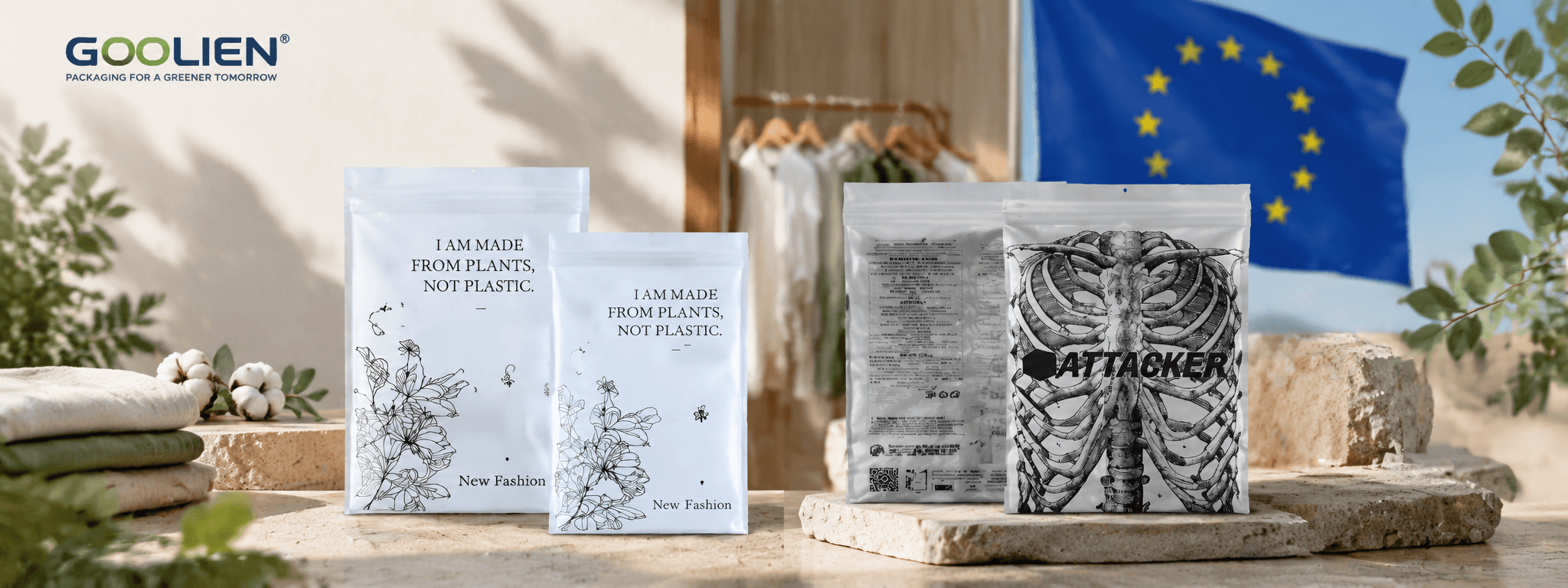
Goolien Packaging supplies flexible packaging made from PE, OPP, PP, CPE, and other available materials. All our products support custom sizes and custom printing.
For apparel packaging projects, we can help customers evaluate bag dimensions, material thickness, and closure structures according to garment specifications and intended use. Our aim is to identify suitable packaging solutions that reduce unnecessary material consumption while maintaining product protection and practical functionality.
References
How Does the PPWR Affect Clothing Packaging Reduction? How Can Plastic Use Be Reduced While Maintaining Product Protection?