
Recycled Plastic vs Compostable Materials for Custom Garment Packaging
At Goolien, we develop custom recycled PE and PLA+PBAT packaging for apparel, footwear and accessories brands, helping buyers translate material requirements into practical bag specifications.
Choose recycled plastic when familiar film performance and a credible collection route are priorities. Choose compostable material only when its certified formulation, storage performance and intended composting system match the destination market. Neither label replaces testing: buyers must approve protection, printing, closures, claims, cost and disposal instructions for the finished bag.
Recycled content describes material input; compostability describes behavior under specified end-of-life conditions.
Compare finished samples, evidence scope and destination infrastructure—not environmental terminology alone.
MOQ, film gauge, print coverage, closures, tooling, testing and shipment terms drive total cost and lead time.
Define the use case
Record garment weight, sharp hardware, moisture exposure, storage period, shipping method, transparency, print and closure requirements.
Verify claims and market fit
Match certificates, test reports and transaction evidence to the supplier, material, finished configuration and markets receiving the bag.
Sample before production
Approve appearance, dimensions, seal and closure strength, odor, rub resistance, packing trials and conditioned storage. Retain an approved sample and specification.
Is compostable packaging automatically better?
No. Its intended conditions and local collection route must exist, and protection must remain adequate.
Does GRS prove a bag is recyclable?
No. GRS addresses recycled content and chain-of-custody requirements; local recyclability needs separate review.
Which option costs less?
Compare quotations at an identical size, gauge, print, closure, quantity, testing scope and delivery term.

| Criterion | Recycled plastic | Compostable material |
|---|---|---|
| Use fit | Often suited to established PE-style formats, subject to specification. | Performance depends on formulation and storage conditions. |
| Presentation | Clarity, color and print require sample approval. | Haze, feel, ink and sealing must be tested. |
| End of life | Requires an accepted local stream. | Requires the composting route named by the claim. |
Evidence and claims
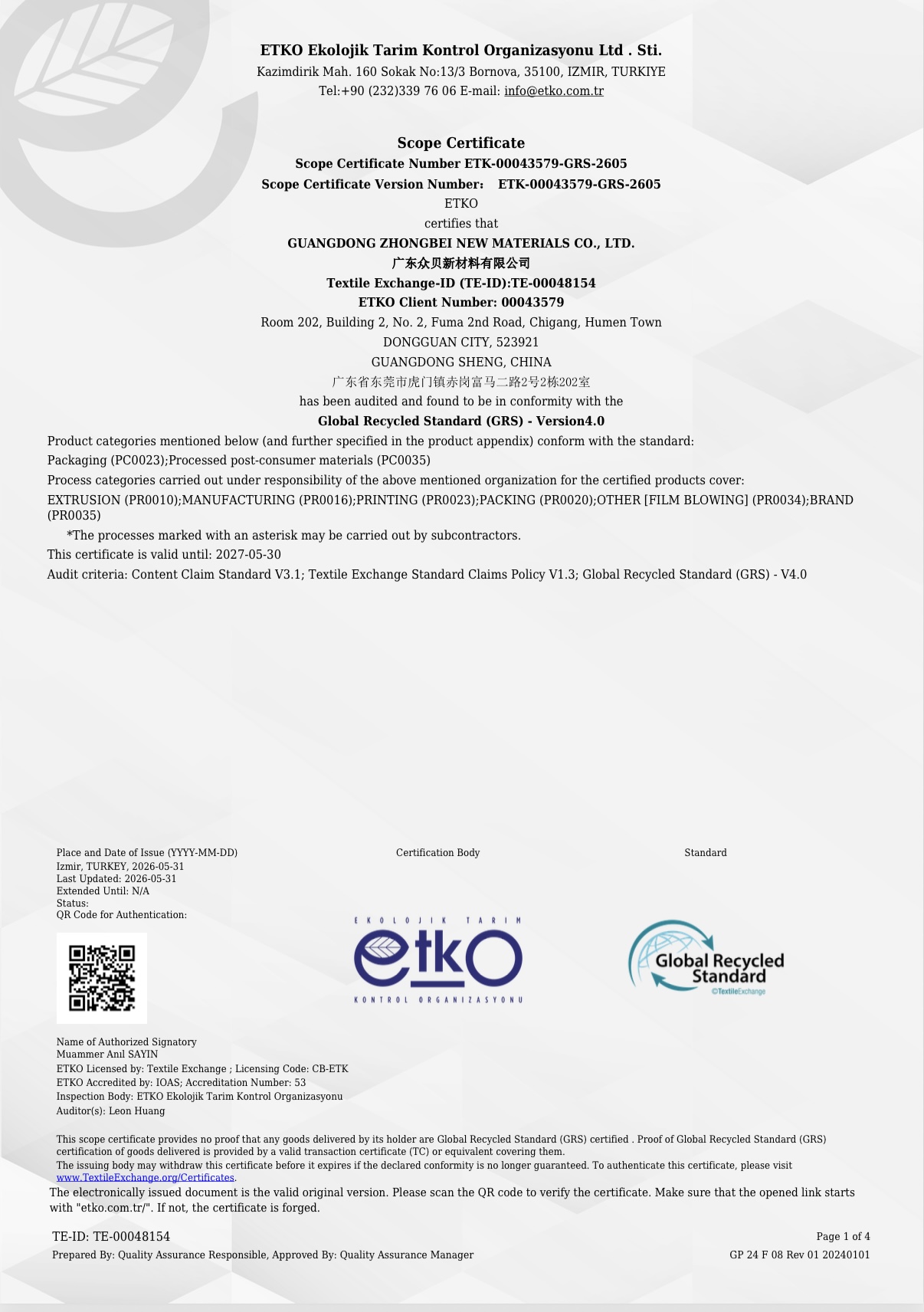
Textile Exchange's Global Recycled Standard explains recycled-content verification, chain of custody and processing requirements. It supports requesting scope documents and transaction evidence, but does not by itself prove local recyclability.
ISO 17088 specifies procedures and requirements for identifying and labeling compostable plastics. This supports checking the exact tested material and composting conditions rather than accepting an undefined biodegradable claim.
For US claims, the Federal Trade Commission's Green Guides, Section 260.7 state that compostable claims need competent and reliable scientific evidence and qualification when appropriate facilities are not widely available. Buyers therefore need market-specific disposal wording.
For EU-bound packaging, Regulation (EU) 2025/40 establishes packaging sustainability, labeling and waste-management rules with phased application. Claims and designs should be reviewed for the relevant implementation date and market.
Supplier approval checklist
- Material declaration, certificate scope and current evidence
- Finished-bag dimensions, gauge, closure, print and tolerance specification
- Pre-production sample plus packing, handling and storage trials
- MOQ, tooling, testing, lead-time assumptions and change-control process
- Destination-market claim review and consumer disposal instructions
From Material Selection to Custom Packaging
Dongguan Goolien Packing Technology Co., Ltd. can discuss OEM/ODM configurations, but buyers should approve documented specifications and representative samples before bulk production.