
Complete Cellophane Bag Specification Selection Guide for Different Products

Select a cellophane bag by matching the packed product's width, length, depth and loading method to the bag's usable internal dimensions. Then define material identity, thickness and performance, bag construction, closure, printing, tolerances and inspection criteria. Do not approve an order from nominal dimensions or the word cello alone.
Measure the product in its final folded or assembled condition.
Distinguish regenerated cellulose from plastic films marketed as cello.
Select thickness through required performance and validated samples, not appearance alone.
Record printing, claims, tolerances, sampling and delivery terms before ordering.
Measure product fit
Measure maximum packed width, length and depth. Add space for insertion, product variation, seals and any flap or closure; confirm whether quoted dimensions are internal or external.
Verify film identity
Request the material declaration, film trade name, coating details and evidence supporting environmental claims.
Define performance and construction
Specify thickness, opening, gusset, seal type, closure, venting and required resistance to tearing, puncture, moisture or handling.
Approve customization and supply terms
Confirm artwork, ink and finish, print position, tolerances, sample type, inspection method, MOQ, production lead time, packing and delivery terms.
Is every clear bag called cello made from cellulose?
No. Ask for the exact polymer or cellulose identity because cello may be used informally for clear plastic film.
How much size allowance should be added?
There is no universal allowance. Base it on product depth, insertion method, closure area, variation and an approved physical sample.
Should thickness be specified only in microns?
No. State the unit and test method, then pair thickness with functional acceptance criteria.
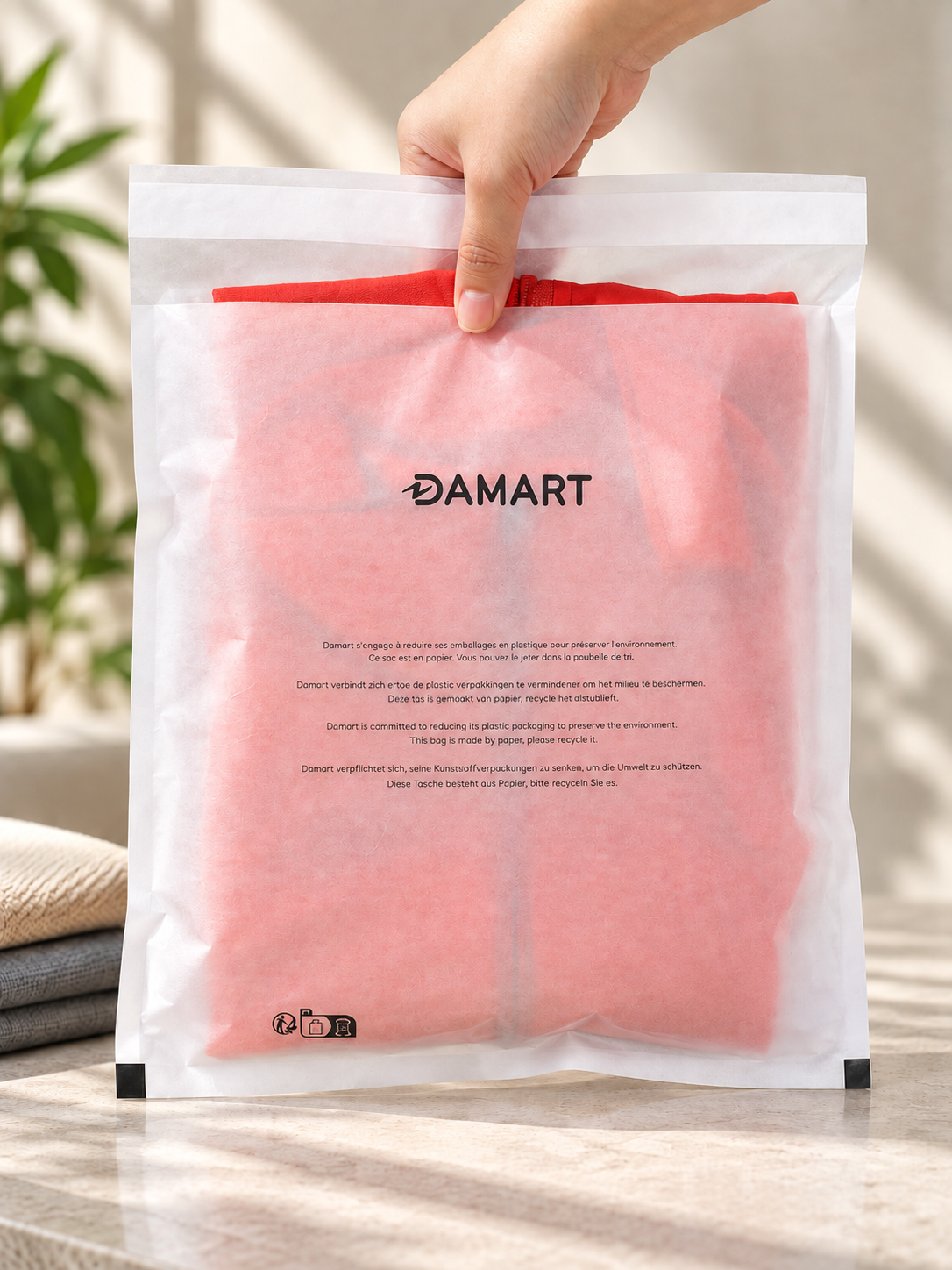
Product-to-specification starting points
| Product | Primary checks |
|---|---|
| Folded apparel | Folded stack depth, flap allowance, venting and print placement |
| Footwear | Boxed or unboxed format, edges, gusset and puncture risk |
| Handbags | Handles, hardware, irregular depth and surface protection |
| Toys and consumer goods | Projections, loading method, closure integrity and market requirements |
Evidence behind the specification
The U.S. Food and Drug Administration's 21 CFR 177.1200, Cellophane, describes cellophane as cellulose regenerated from viscose and addresses coatings for its regulated food-contact scope. This supports asking whether the offered film is regenerated cellulose rather than assuming every clear cello-look bag is the same material.
The International Organization for Standardization's voluntary ISO 4593 describes mechanical scanning for film thickness. It supports recording both the thickness unit and measurement method so quotations and inspections are comparable.
For environmental wording, the U.S. Federal Trade Commission's Green Guides require substantiation for claims such as compostable or degradable. ISO's voluntary ISO 18606 sets requirements and procedures for packaging recoverable through organic recycling. Buyers should therefore request claim-specific evidence for the material, finished structure and intended disposal system.
Preorder specification checklist
- Material and coating declaration; dimensions and tolerances; thickness unit and method
- Bag style, opening, gusset, closure, seals, vent holes and packing orientation
- Artwork version, colors, print area, finish and barcode readability
- Functional sample using the real product; signed approval criteria
- MOQ, sample charges, production and delivery schedule, carton packing and inspection plan
Use one controlled specification sheet for quotation, sampling, approval and bulk inspection. Dongguan Goolien Packing Technology Co., Ltd. can review an application brief for OEM or ODM packaging, but buyers should approve documented materials and physical samples before committing to volume production.